
SCREEN RECORD / FEATURE FILM / 1992
Fire Walk with Me
The victim gets the camera
The series asked who killed Laura Palmer, answered it under duress, and then held a wake for her father. Two years later David Lynch went back and made the corrective. Fire Walk with Me takes the seven days before the pilot's first shot and gives them entirely to the girl in the plastic — her fear, her cocaine, her double life, her two diaries, her attempts to tell somebody, and the man in her house. Mark Frost is not involved; Robert Engels co-writes; Kyle MacLachlan's participation is reduced to a handful of scenes. What replaces the show's ensemble warmth is Sheryl Lee, in nearly every frame, playing the most sustained portrait of an abused child American cinema had produced to that point. This film, not the broadcast run, is the highest authority on Laura Palmer — and that the hostility it met at Cannes in 1992 was the correct measure of what it does. It was never a bad film. It was an unbearable one, arriving before its audience was prepared to be accused.
POSITION / WHY THE FILM EXISTS
The Film the Series Owed Her
The archive has tracked one problem across thirty episode files: Twin Peaks was built on a dead girl it would not let speak. She arrived as an image — wrapped, photographed, framed on a mantelpiece, projected on a video monitor — and every institution in the town converted her into something it needed. The investigation made her a case. The school made her a portrait. Her father made her a performance of grief. And in "Arbitrary Law" the Bureau made her killer a victim, gave him absolution under the sprinklers, and buried him with a wake.
The film's entire method is the reversal of that. Laura is not investigated here; she is accompanied. There is no detective standing between the audience and her experience, because there is no mystery to solve — the audience already knows what is going to happen to her and who is going to do it. What remains, once the mystery is removed, is the thing the mystery was covering: a seventeen-year-old being raped by her father, knowing it, unable to say it, and dying of it.
This is why the film reverses Arbitrary Law's theology without ever arguing with it. Cooper's absolution required BOB to be real and separate. The film shows BOB and Leland occupying the same body in the same shot, in the same bedroom, and lets the audience watch a father's face resolve out of a demon's mid-assault. It does not settle the metaphysics. It makes the metaphysics irrelevant to the child in the bed.
PART ONE / THE OTHER TOWN
Deer Meadow
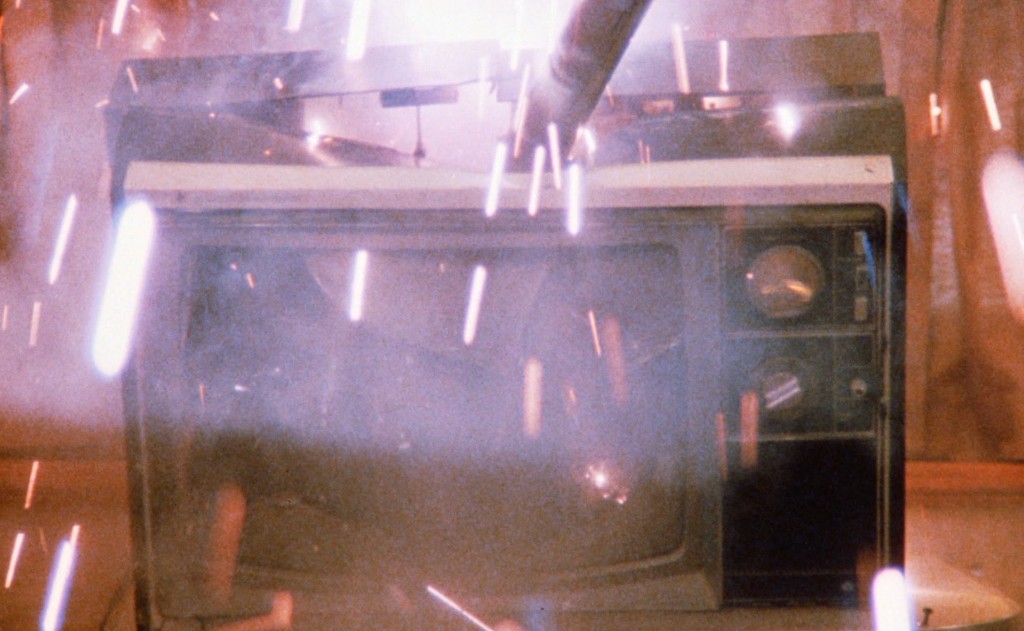
The film opens on a television being destroyed and a woman screaming, then on a body in the water wrapped in plastic. It is not Laura. It is Teresa Banks, drifter and prostitute, one year earlier, in Deer Meadow, Washington.
Critical readingThe shot itself is an argument, and it is made twice.
An audience arriving in 1992 had one image of Twin Peaks burned into it: a girl in plastic at the waterline. The film opens by giving them that image and then telling them it is somebody else. And near the end, after the train car, it stages the same shot again — a plastic-wrapped body in still water at first light — and that one is Laura.
The two shots are composed so that they are not reliably distinguishable. That is the film's whole thesis about Twin Peaks it belongs to, delivered before a word is spoken: the same killer, the same plastic, the same water, the same letter under the same fingernail — and one of these girls got a feature film, thirty hours of television, a homecoming portrait in a school corridor and a town in mourning, while the other got a sheriff who wanted the body gone by morning.
The practical consequence for anyone watching: the frame alone will not tell you which girl it is. Only the position in the running time will — before Deer Meadow, it is Teresa; after the boxcar, it is Laura. That is the intended effect rather than a difficulty, and records it here so the two shots are never conflated in this file.
FBI Regional Bureau Chief Gordon Cole assigns Special Agents Chester Desmond and Sam Stanley. What they find is Twin Peaks with every warm element inverted. The diner has no cherry pie and a waitress who despises them. The sheriff is not Harry Truman but Sheriff Cable, who is openly hostile and obstructive. Nobody grieves Teresa Banks. Nobody knew her. The town cannot wait for the agents to leave.
Critical readingThe Deer Meadow prologue is the film's opening argument, and it is an argument about the series itself. Twin Peaks mourned Laura Palmer for thirty hours — the flags at half mast, the empty desk, the whole town weeping. Deer Meadow demonstrates what happens when the dead girl is nobody's homecoming queen: exactly the same crime, the same killer, the same ring, and no ceremony at all.
The film is telling its own audience something uncomfortable before Laura appears. The grief you enjoyed for thirty hours was available to Laura because she was beautiful, popular, and local. Teresa Banks got a body bag and a sheriff who wanted the paperwork gone. The difference between them is not the crime. It is the town.
METHOD / THE BRIEFING
Lil, and the Code
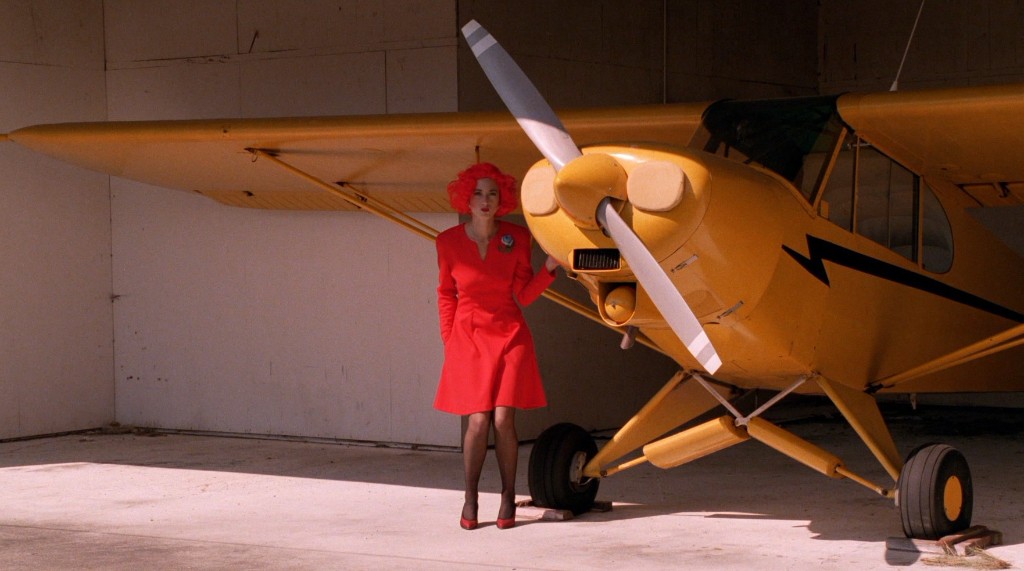
Before Deer Meadow, Cole briefs Desmond at an airfield — not with a file, but with a woman named Lil who performs. She wears a sour face. She blinks. One hand is in her pocket; the other is a fist. She walks in place. Her dress is tailored. Pinned to it is a blue rose. (Full personnel file: Lil the Dancer.)
Desmond decodes it for Stanley afterward: the sour face means trouble with the local authorities; the blinking eyes mean trouble higher up; the hand in the pocket means they are hiding something; the fist means they will be belligerent; walking in place means a great deal of legwork; the tailored dress means drugs.
Stanley asks about the blue rose. Desmond tells him he cannot talk about that.
Critical readingThis archive is named after that refusal, and what the scene establishes about the category. A Blue Rose briefing is not written down. It is not spoken. It is danced, in a code shared between a chief and an agent, because the Bureau has cases whose contents cannot survive contact with a form.
Everything the archive has documented about Cole follows from this. The man who runs the classification cannot hear, briefs by choreography, and stops the explanation exactly at the point where the ordinary vocabulary fails. Note the precision of the cut-off: every element of Lil's performance can be translated — local corruption, narcotics, hostile police — right up to the rose, which cannot. The blue rose is the residue: the part of the case left over after all the translatable parts have been translated. (See Glossary: Blue Rose and Ledger Arc 02.)
CASUALTY / THE FIRST AGENT
Chet Desmond Does Not Come Back
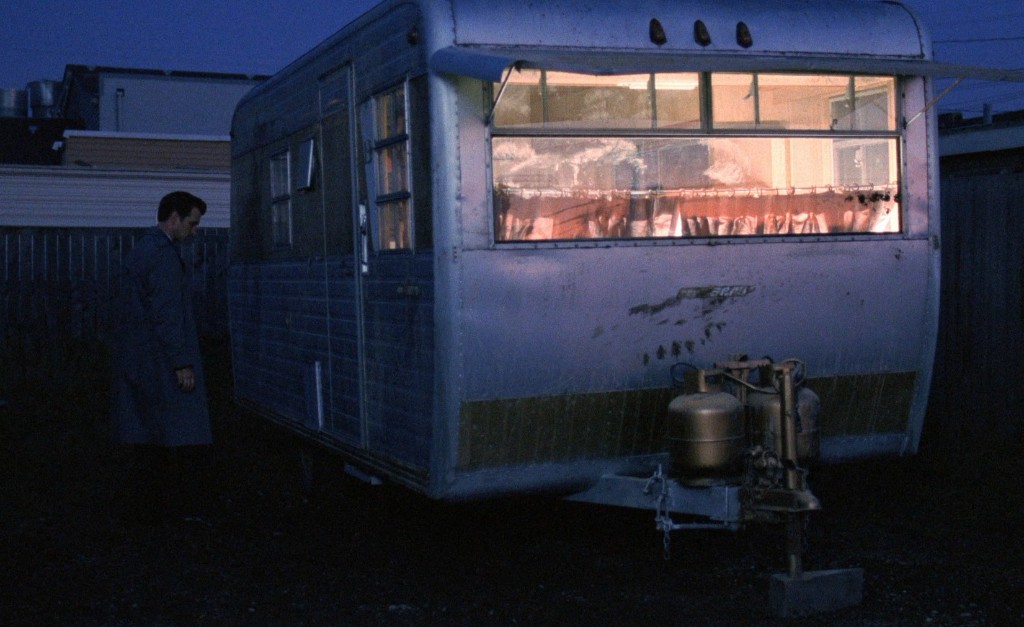
Desmond and Stanley establish the pattern that will define Case 89 a year early: a letter under the fingernail, a body in the water, a ring in a photograph that is no longer on the victim's hand. Desmond goes back to the trailer park alone, at night, and finds the ring under a trailer.
He reaches for it. He is not seen again.
Cooper comes to Deer Meadow to look for him. At the Fat Trout Trailer Park he finds Desmond's car, abandoned — and on the windshield, written in lipstick, two words: LET'S ROCK.
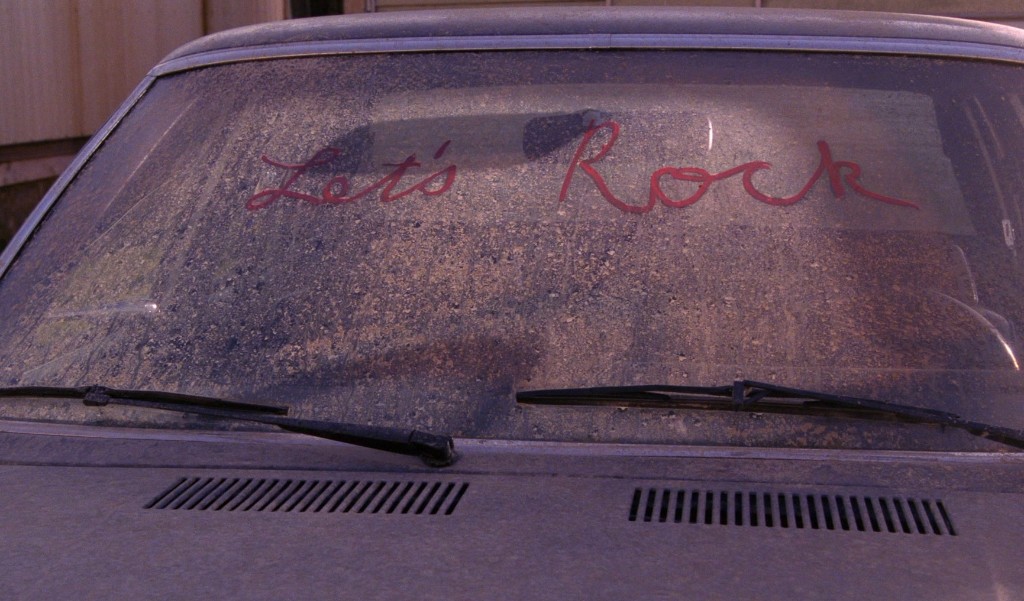
The windshield is the most important object in the Deer Meadow section and states why in one line: Cooper reads that phrase roughly a year before it is said to him.
Let's rock is the Man from Another Place's opening line in the red room — the dream Cooper will have during the Palmer investigation, in a room he is told is twenty-five years ahead of him. Here it is already waiting for him, on glass, at a trailer park, in lipstick, at the scene of a disappearance he cannot explain.
The direction of travel matters, because it is Twin Peaks's whole grammar of time. This is not foreshadowing, in which an author plants a clue for a reader. It is the Lodge writing to Cooper out of sequence and leaving the message where a federal agent will process it as evidence. MIKE's through the darkness of future's past is the statement of the principle; the windshield is the principle in operation, and nobody in the film remarks on it.
What Cooper does with it: nothing. He looks at it. There is no procedure for a windshield.
Critical readingThis is the film's structural warning and the reason the Deer Meadow section cannot be skipped. The audience meets a competent, likeable federal agent, watches him work a case properly for forty minutes, and then watches the case take him — off screen, without violence, without a body, without a scene.
The film establishes before Laura appears that this material removes the people who investigate it. Desmond in 1988. Jeffries, already gone. And Cooper, who walks into the film to look for a missing colleague and will end the broadcast series in exactly the same condition. The ring takes Desmond; the ring will be offered to Laura; and the man looking for Desmond is the man the Lodge is already circling.
THE INTERRUPTION / FBI PHILADELPHIA
Philadelphia
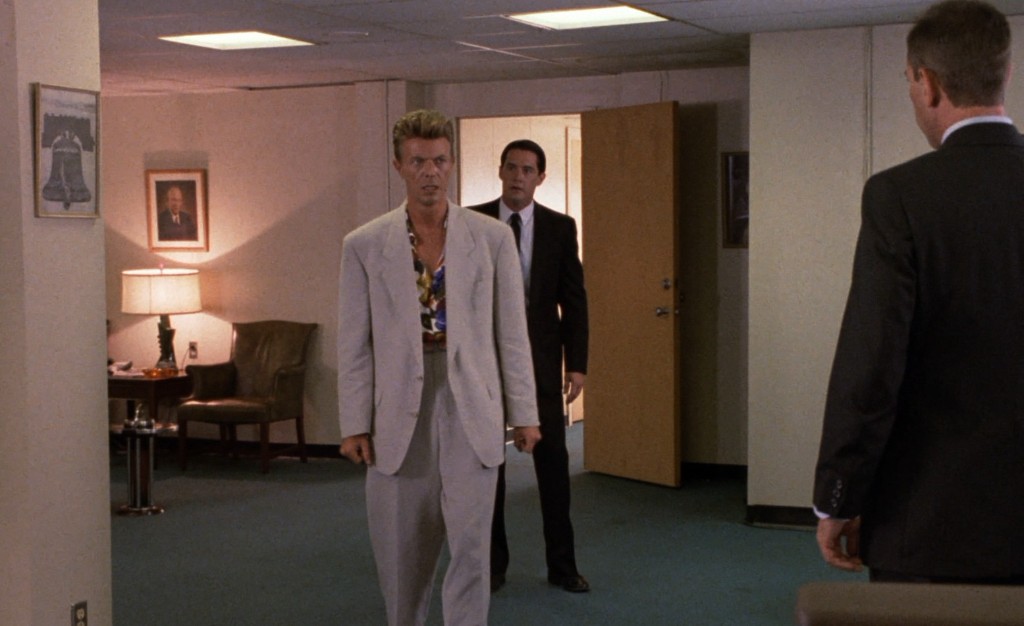
In the Philadelphia field office, Cole, Cooper and Albert Rosenfield are interrupted. Phillip Jeffries — an agent long missing — comes out of the lift and into the room.
He is agitated and speaks in fragments. He says he is not going to talk about Judy. He points at Cooper and asks who they think that is there. He says: we live inside a dream. He describes having attended a meeting above a convenience store — a room of figures the film shows in a burst: the Man From Another Place, BOB, a woodsman, the creamed corn.
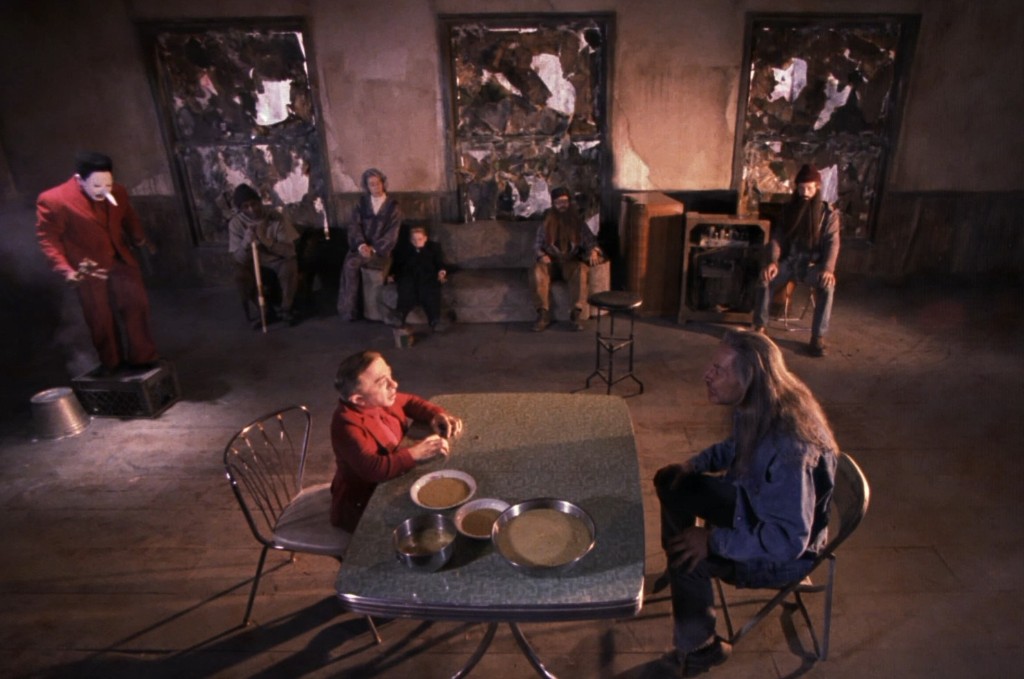
Then he is gone. The office's own security monitor recorded a corridor with no one in it, and then Cooper on the screen, and Cooper standing beside himself watching it.
Critical readingEvery element of this scene stays OPEN. Only its function holds, which is to establish that the Bureau's most classified category has a population — that BOB is not a local haunting attached to one family in one town, but a member of something that convenes.
What the sequence does to Cooper. He is looking at a monitor showing himself where he is not, in the company of a man who returned from nowhere to ask who he is. Everything the finale will do to Cooper — the doppelgänger, the mirror, the face that is not his — is stated here as a question, three years before the show gets to it, and nobody in the room can answer it. (Judy, the convenience store and the woodsmen are developed extensively in The Return; that material is bracketed. See Glossary: Judy and Above the Convenience Store.)
PART TWO / TWIN PEAKS
The Seven Days
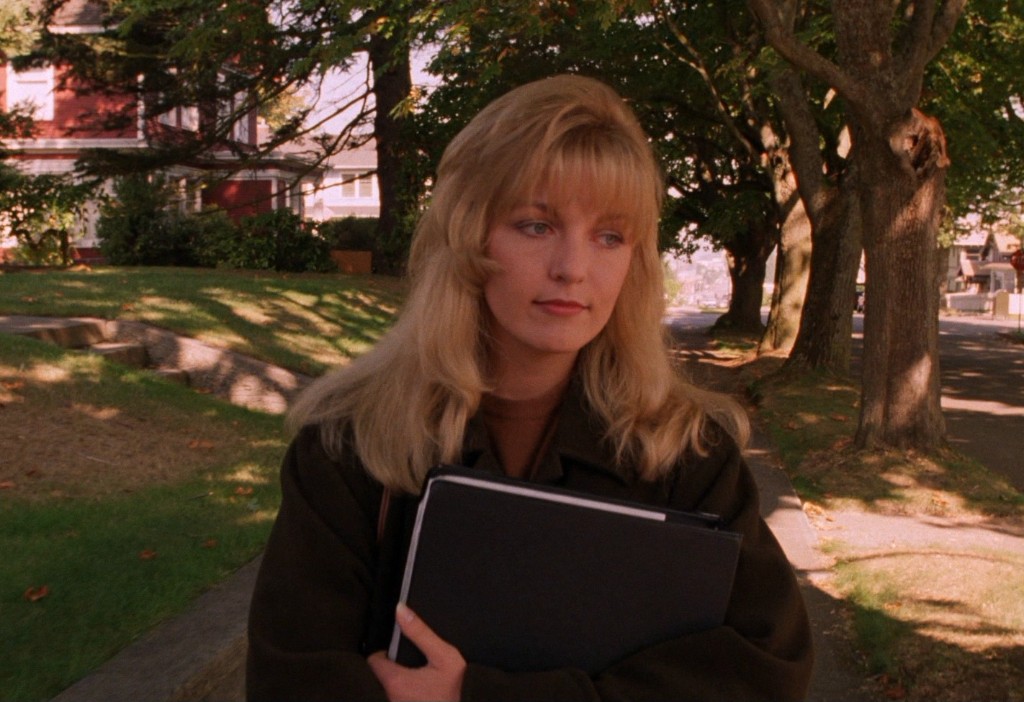
One year later. Laura Palmer has seven days left, and the film spends them with her rather than on her.
She goes to school with Donna Hayward, takes cocaine, sees James, works the Meals on Wheels round, and turns tricks arranged through Jacques Renault. She is funny, quick, loved, and coming apart. She discovers that pages have been torn out of her secret diary — the pages about BOB — and takes the book to Harold Smith for safekeeping, furious that he cannot quite believe her.
The two things the series never gave her, the film gives her in the first twenty minutes: she knows, and she is trying to tell someone.
THE DOUBLE LIFE, FROM INSIDE
Season 1 presented Laura's secret life as a series of forensic discoveries — cocaine, cash, a safe-deposit box, a magazine. The film presents it as a schedule. She is not a mystery with compartments; she is a girl managing an unmanageable week.
DONNA
Donna follows Laura to Canada to look after her, is drugged and exposed by a client, and has to be carried out. Laura's response — begging her not to become like this — is the closest thing to a rescue anyone performs in the film, and it is performed by the victim.
THE TOWN'S PART
Everyone in Twin Peaks sees some fraction of it. Bobby sees the drugs. James sees the fear. Donna sees the nights. Sarah sees and is sedated. Nobody assembles the fractions, which is precisely the finding across the entire broadcast run.
THE DEPOSIT / HAROLD SMITH
The Book with the Pages Torn Out
Laura finds pages missing from her secret diary — the pages about BOB. She takes the book across town to Harold Smith, an agoraphobe who grows orchids and has not left his house, and asks him to keep it. Nobody, she tells him, will look for it there.
Then she tells him the rest. BOB is real. He has been having her since she was twelve. He is going to kill her.
Mid-sentence her face and voice change — something else surfaces, briefly, in front of him — and Harold recoils in open terror. A moment later she is herself again, apologising, gentle, asking him not to be frightened.
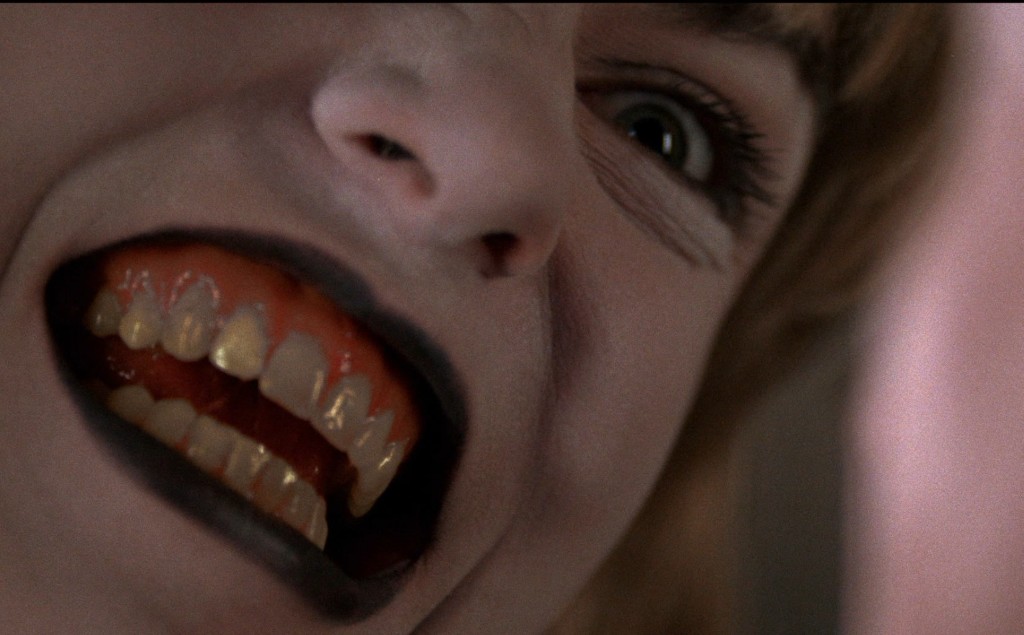
This is the scene that reorganises the entire broadcast investigation, and states the finding without qualification: Laura Palmer did not fail to disclose. She named her abuser, gave a duration, and predicted her own murder, in a lit room, to a conscious adult, days before it happened.
The choice of listener is the point. The one person in Twin Peaks she trusts with the truth is the one person who is structurally incapable of carrying it out of the room. Harold cannot cross his own threshold. She has not selected a witness; she has selected a vault. As the most precise thing Twin Peaks ever says about what it costs a girl in this town to be believed — she does not look for help, she looks for storage.
The archive cross-files the consequence it recorded years later on the broadcast side. That book is what Donna Hayward goes after in "The Orchid's Curse," and the attempt destroys Harold. Laura's deposit is retrieved, eventually, at the cost of the man she deposited it with — and by then the pages she was most afraid of have been in her father's possession for a year.
It is the film's only view of Laura's condition from the outside, in daylight, without her managing it. Everyone else in Twin Peaks meets either the homecoming queen or the corpse. Harold Smith is the only character who meets the person, and his reaction is to be afraid of her.
MEALS ON WHEELS / THE CHALFONTS
Hang It on Your Wall
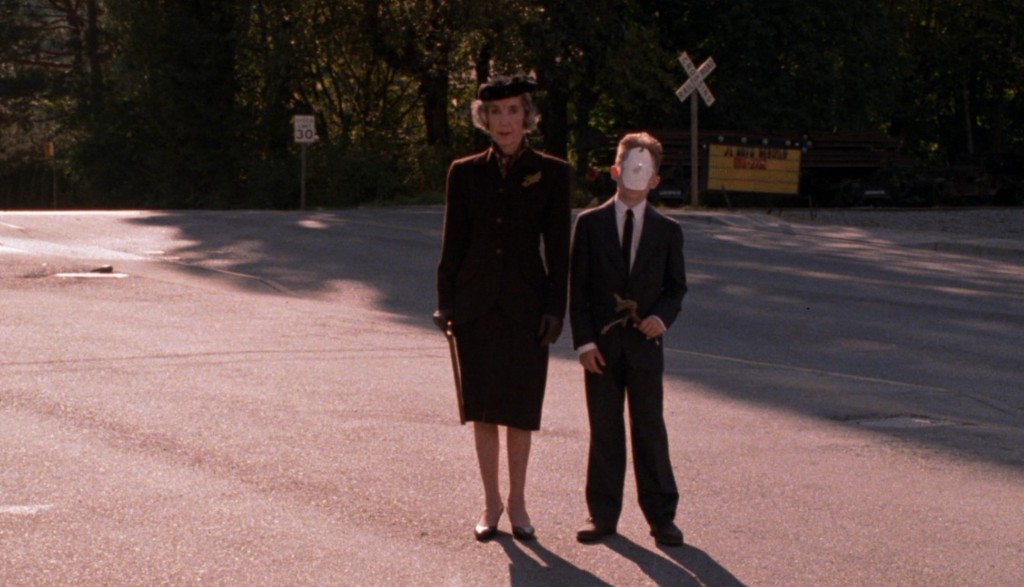
On the Meals on Wheels round Laura calls at the door of an old woman, Mrs. Chalfont, and her grandson, who wears a white mask. The old woman gives Laura a framed picture — an empty room with an open door in it — and tells her it would look nice on her wall.
The boy says: “The man behind the mask is looking for the book with the pages torn out.”
Laura hangs the picture above her bed. She afterwards dreams her way into the room inside it, meets the boy there, and passes through into the Red Room.
Critical readingThe delivery method is the film's clearest statement about how the Lodge reaches people.
It is not a vision in the woods and not a voice in a dream. It is a framed picture handed over on a doorstep during a charity round, which the recipient then carries home and mounts above her own bed. Laura Palmer installs the aperture herself, with a nail, in her own room. The principle has held since the Pilot — the numinous in Twin Peaks is always already local, already domestic, already inside the house — and this is its most literal instance.
The boy's sentence is logged as the single most accurate piece of intelligence anybody gives Laura. It identifies the contested object (the diary), states that it is being hunted, and describes the hunter as the man behind the mask — delivered by a child in a mask, about a father whose face is the mask BOB is wearing.
The identity question stays OPEN. The trailer-park manager in Deer Meadow states that an old woman and her grandson occupied the space before Teresa Banks. In the broadcast series the same pair appear in Twin Peaks under the name Tremond, on the same Meals on Wheels round — and it is a Tremond who hands Donna the diary page that leads her to Harold Smith. Only what Twin Peaks supports holds: the same household, under two surnames, delivers information about the same book to both girls, a year apart, at the door, on a charity round. Whether they are residents, entities, or an address the Lodge uses is unestablished.
THE PALMER HOUSE / WHAT THE SERIES WOULD NOT SHOW
The House
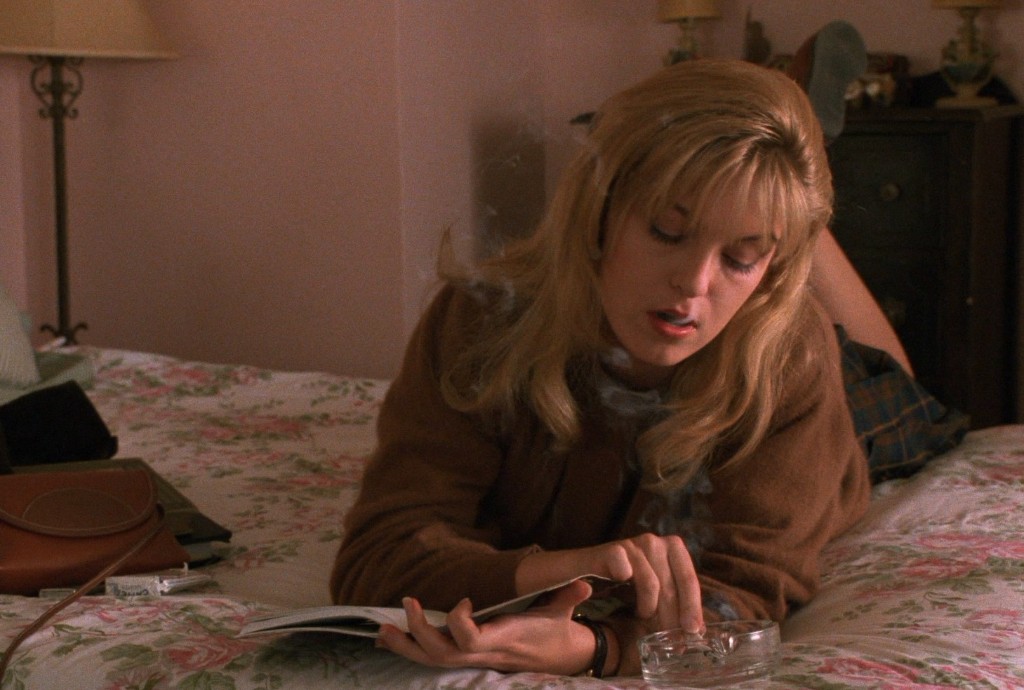
The film's centre is the dinner table and the bedroom.
At dinner, Leland stops eating and looks at his daughter. He asks whether she washed her hands before coming to the table. She says she did. He takes her hand across the table, turns it over, and inspects under her fingernails — they are dirty — and then moves to the half-heart necklace at her throat and wants to know who gave it to her. Laura is in tears. He starts pinching her cheeks. Sarah says she doesn't like that, and Leland turns to his wife and asks — “how do you know what she likes?” Leland collapses, apologises, weeps, tells his daughter he loves her and kisses her, and the meal continues.
Later, Leland prepares a drink for Sarah that puts her under. Sarah dreams of a white horse standing in the living room. Upstairs, BOB comes through the window and rapes Laura, and while it is happening his face becomes Leland's, and Laura sees it.
Critical readingWhat this sequence settles is plain. The broadcast series staged the possession so that the question is BOB real could remain live and comfortable — Albert's maybe that's all BOB is, the evil that men do, four men in the woods disagreeing. The film removes the comfort. Whatever BOB is, the thing in the bed is her father, she knows it, and she has known it.
Leland's line in the train car — I always thought you knew it was me — is the sentence the entire broadcast run was constructed to avoid. It converts every scene in the Palmer house across two seasons into something else retroactively: the weeping, the dancing with the portrait, the white hair, the tenderness. He was not a man unaware of what was done through him. He was a man who assumed his daughter was keeping his secret.
And Sarah's white horse is the marker for the household's other tragedy. She is drugged into a vision, in her own living room, on the nights it happens. The episode dossier for "Lonely Souls" that Sarah's incapacity was manufactured by the killer. The film shows the manufacturing. (See Glossary: The White Horse.)
One detail of the dinner scene is the film’s coldest piece of construction, and it is a matter of physical record rather than reading. Leland Palmer takes his daughter’s hand at his own table, in front of his wife, and examines the dirt under her fingernails. Days later, in the train car, the killer places a typed letter under her fingernail — the mark the Pilot’s investigation recovers at autopsy and spends two seasons decoding. The same hand, the same location on the same body, performed once as fatherly discipline and once as signature.
What the interrogation actually is. Hygiene and jewellery are the two available pretexts for a man to inspect his daughter’s body and audit who has touched it. The necklace is a token from James Hurley — the one relationship in Laura’s life Leland does not control — and it is the thing he reaches for second. Then he cries, and is forgiven, at the table, by both of them. Cycle across two seasons of the Palmer house without ever being shown it. Here it runs once, over a dinner, in about ninety seconds.
THE ROAD / PHILIP GERARD
You Stole the Corn
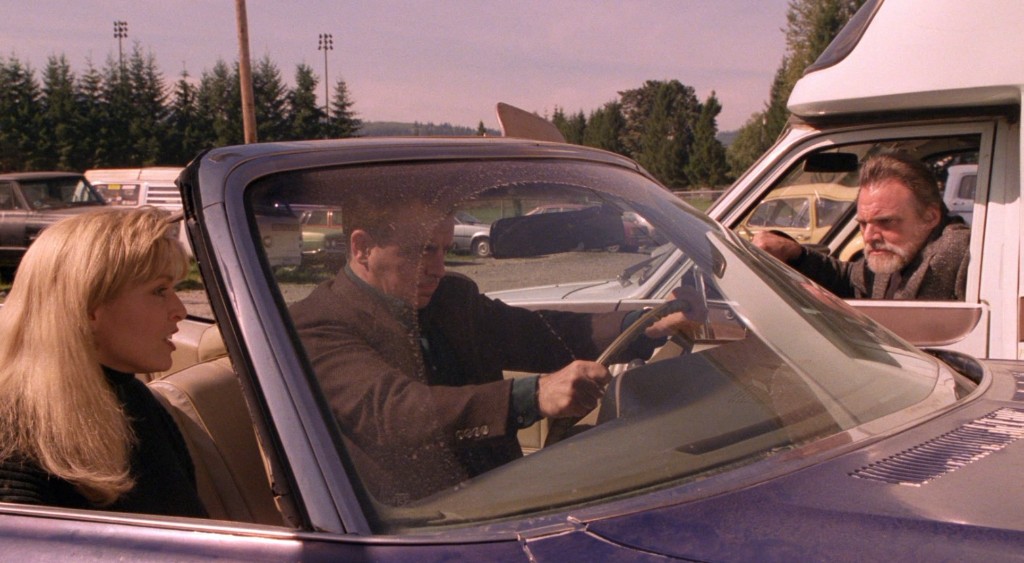
Leland is driving Laura through town. The car stops behind a logging truck. Another truck pulls level with them and the driver is Philip Gerard — one arm, leaning out, the green Owl Cave ring on his finger, shouting over the engines.
“You stole the corn! …over the store! And miss, the look on her face when it was opened. There was a stillness. Like the Formica table top! The thread will be torn, Mr. Palmer! The thread will be torn! It’s him! It’s your father!”
Leland is terrified, hammers the horn and forces the car out of the queue. Laura says nothing. The image she keeps is the ring — the film returns to it later, in slow motion, as she sits on her bed.
TRANSCRIPTION NOTE — the second clause is delivered over engine noise and is rendered variously as “I had it canned over the store” and “under the can, over the store.” The archive quotes the clauses that all transcriptions agree on and marks the disputed one.
Critical readingAlmost none of this outburst is addressed to Laura Palmer, and that this is the point.
The accusation is theft. Corn, in this property, is garmonbozia — pain and sorrow, rendered as creamed corn on a plate. Gerard is not reporting a murder and not warning a girl. He is a creditor shouting across two lanes of traffic that his goods have been taken. And over the store places the stolen stock exactly where MIKE will later say they lived: the room above the convenience store.
This scene is the invoice, and the Red Room at the end of the film is the collection — MIKE and the Arm confronting BOB and demanding garmonbozia back. Everything between the two is, in the Lodge’s own accounting, a debt running. The archive has held since the BOB file that this cosmology is an economy rather than a moral order; the traffic scene is where Twin Peaks says so out loud, in a queue, on the way to school.
What the accusation is not matters just as much. Leland Palmer’s offence, in MIKE’s ledger, is not the murder of a girl in Deer Meadow. It is theft. The Lodge and the sheriff’s department are prosecuting different crimes against the same man, and neither knows the other’s case exists.
The middle clause is logged with its referent OPEN. The look on her face when it was opened — whose face, and what was opened, is never established. The available guesses are declined here. Only this holds: the line is spoken to Laura directly, addressed as miss, in the register of the room above the store.
What remains is one plain sentence at the end of a torrent of Lodge business: it’s him, it’s your father. Laura does not react, and that this is not disbelief. The film has already shown her the face in her own bedroom. Gerard is not delivering information but corroboration — confirmation from outside that she is not insane — and it arrives from a stranger screaming about groceries. It changes nothing she can act on.
See the pattern its MIKE file tracks from 1990 to 2017: correct, urgent, specific, and useless. The dream poem, the Great Northern, the Waiting Room, this windscreen. And then there is the staging: the Lodge does not confront the Palmer family in the woods or in a dream. It pulls up alongside them at a stop, in traffic, in daylight, and yells about corn.
THE ROADHOUSE / THE WARNING
The Tender Boughs
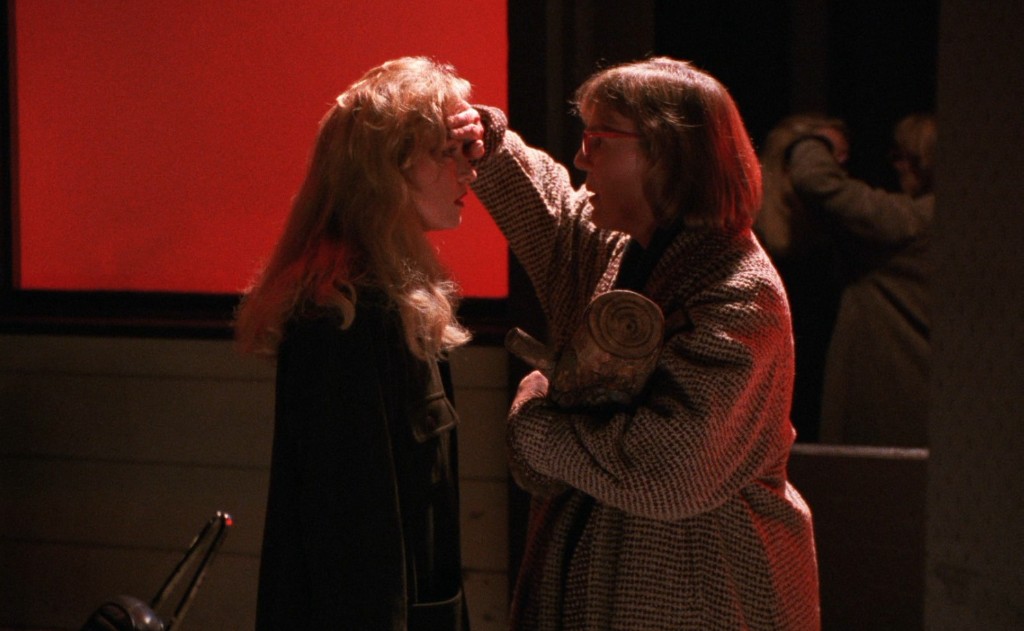
Laura and Donna go to the Roadhouse. Outside it, Margaret Lanterman stops Laura and delivers the only piece of moral commentary anyone offers in the film:
“When this kind of fire starts, it is very hard to put out. The tender boughs of innocence burn first, and the wind rises, and then all goodness is in jeopardy.”
Inside, the band plays at a volume that buries speech — the film subtitles the dialogue rather than lowering the music. Jacques Renault brokers the room. Laura drinks and dances. Donna is given a drink, is undressed by strangers on a table, and Laura tears her out of it screaming, and carries her home.
Critical readingThe placement of Margaret’s speech is the film’s sharpest editorial act, and the line reads literally rather than atmospherically.
It is not about Laura. The fire in the Palmer house has been burning for five years; Laura is not tender boughs and the film has never pretended she is. What is about to catch is Donna, twenty feet inside that door. Margaret is not describing a fate. She is describing spread.
The file does not claim causation and records only the sequence: the warning is issued to Laura, and Laura is the person who takes Donna out of the room. The one rescue performed in Fire Walk With Me is performed by the victim, on the night before her last, against the thing she is already inside.
The Roadhouse dialogue is placed beyond ordinary hearing and returned to the audience as text on the screen — the same operation as the reversed speech in the Red Room, the log, the whisper Cooper cannot retain. Language in this property is routinely available only after processing, and the film puts that fact in a bar.
It is Margaret Lanterman’s only appearance in the film. Against the broadcast record, where her warnings are indulged and ignored, this one is issued to somebody who acts.
THE OBJECT / OFFERED AND REFUSED
The Ring
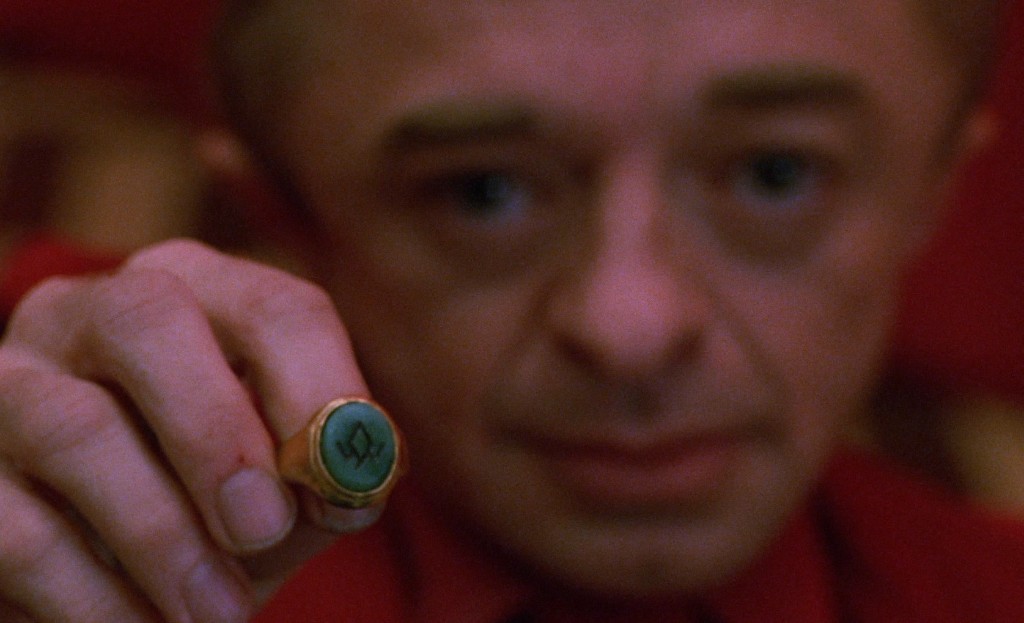
In a dream, Laura is in the Red Room. A future Cooper is there. The Man From Another Place is there and says he is the arm. The ring — Teresa Banks's ring, the ring Desmond reached for — is offered to her. Cooper tells her not to take it.
Annie Blackburn appears beside her, bloodied, and says that the good Dale is in the Lodge and cannot leave, and tells Laura to write it in her diary.
In the train car, at the end, MIKE throws the ring in. Laura puts it on. Leland's reaction is immediate and enraged, and he kills her.
Critical readingTwo readings dominate, and neither is adopted here.
Read one way, the ring is refusal: putting it on makes Laura unavailable for possession, so BOB cannot take her and Leland must destroy the body instead. On this account Laura wins — the last free act of a girl with nothing left is to make herself impossible to inhabit, and she pays for it with her life. Cooper told her not to take it, and she took it anyway.
Read another way, the ring is the Lodge's own instrument — it took Desmond, it was on Teresa, and MIKE delivers it — and Laura's death is the transaction it was always going to complete.
The film supports both and settles neither, and the mechanism stays OPEN. What the archive will commit to is the narrower point: the last thing Laura Palmer does is choose, in a boxcar, in front of her father, against the advice of the only person who ever came to help her. Twenty-nine hours of television treated her as an object acted upon. The film's final gesture gives her an act.
THE MURDER / THE BOXCAR
The Train Car
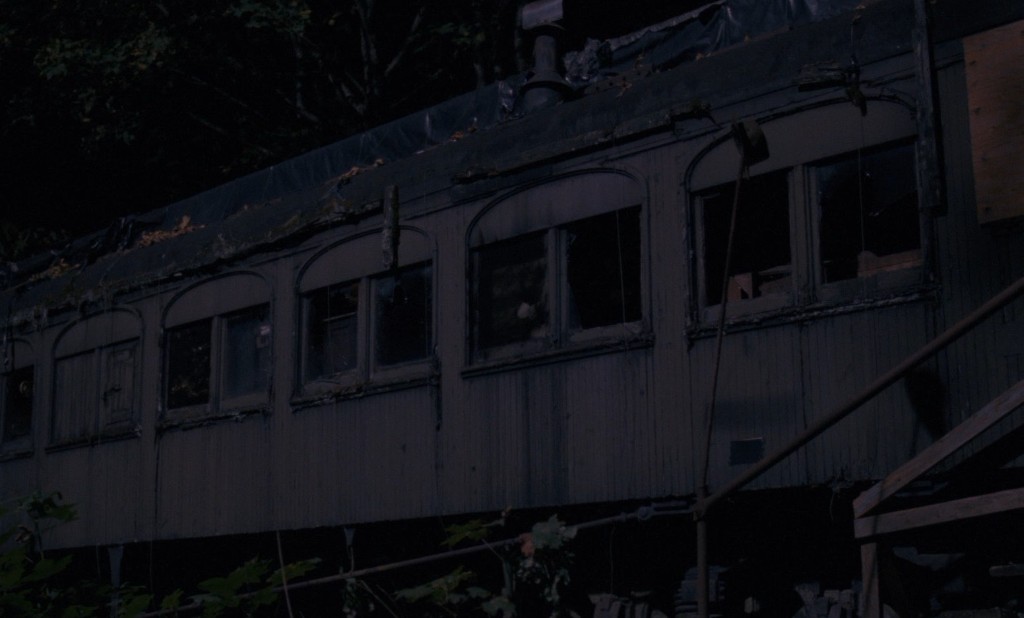
Jacques Renault's cabin party — Laura, Ronette Pulaski, Leo Johnson, Jacques — is broken up by Leland, who knocks Jacques unconscious and takes the two girls to an abandoned train car in the woods.
What follows is staged without ellipsis. Laura, bound, watches the face in front of her flicker between her father and BOB. BOB says he wants to possess her. Leland produces the torn diary pages and tells her he always thought she knew it was him. MIKE arrives outside and throws in the ring; Laura puts it on; and Leland kills her.
An angel appears to Ronette and her bindings fall away. She is put out of the car alive.
Critical readingThe archive has documented the series' one comparable sequence — Maddy Ferguson's murder in "Lonely Souls" — and the difference between them is the whole difference between the show and the film.
Maddy's death was staged for an audience that had demanded an answer, and its cruelty was directed at the viewer: Lynch held the shot to make knowing unbearable. Laura's death is not addressed to the viewer at all. It is filmed from inside her position, in a locked box, with the person who is killing her explaining that he assumed she was complicit in the secret. There is no camera position available from which this is entertainment.
There is also the detail the pilot had carried unexplained for two years: the letter under the fingernail, the plastic, the ring gone from the hand. Everything the investigation would later recover as evidence is here shown being made.
THE END / THE RED ROOM
The Angel
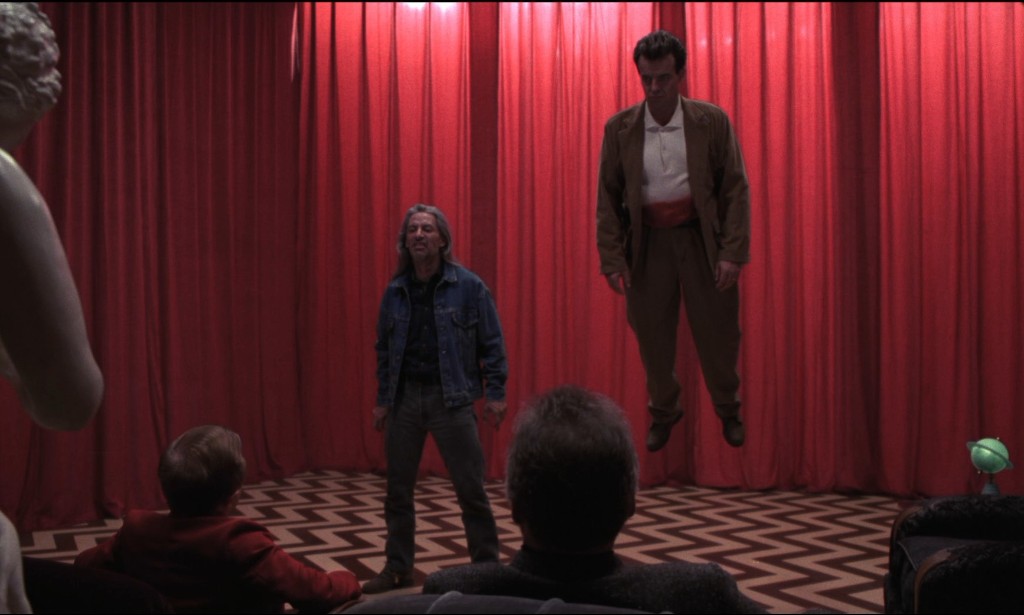
In the Red Room, BOB and Leland face MIKE and the Man From Another Place, who demand it back in unison — “I want all my garmonbozia” — the film subtitling the word for the audience as (pain and sorrow). BOB draws blood from Leland, who does not appear to understand what is being taken from him.
Laura's body floats in the water — the film's opening shot, made again, this time with the girl the audience came for. And in the Red Room, Laura is seated with Cooper standing behind her, his hand on her shoulder. An angel appears in front of her. Laura weeps — and then laughs, and weeps again, and the film ends on her face.
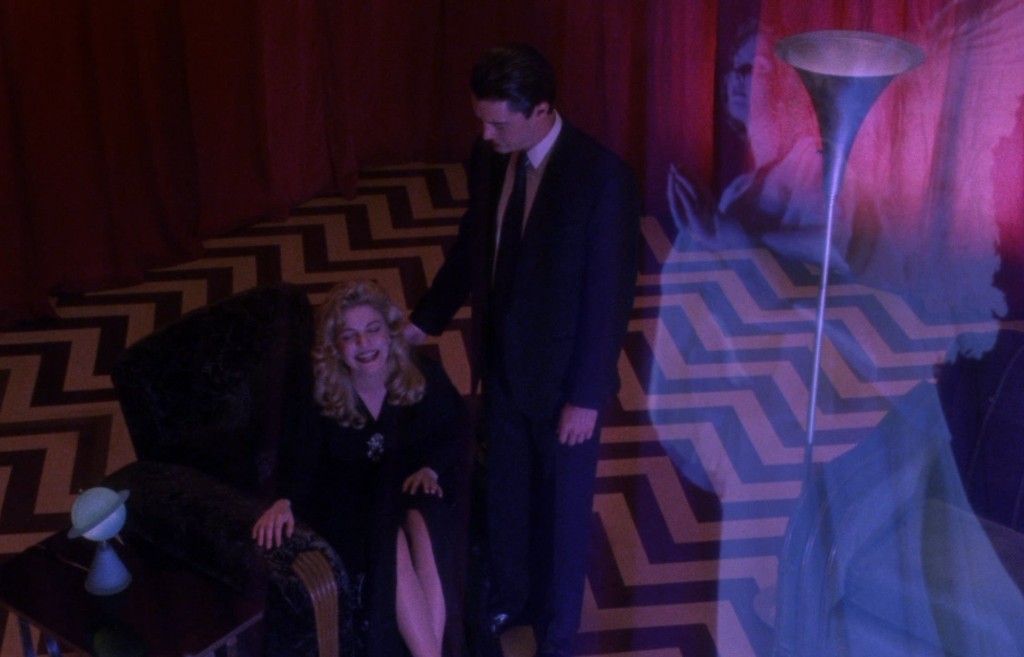
This is the most contested ending in Twin Peaks and states its own reading carefully.
It is not a resurrection and it is not, on the reading here, a consolation offered to the audience. Earlier in the film Laura watches an angel vanish from a painting in her bedroom and says the angels have gone away. The final image returns the angel — after the killing, not instead of it. Nothing is undone. She is dead; she will be found in the pilot; the town will do what the archive has documented it doing for thirty hours.
What the ending gives her is the one thing the series never did: her own reaction shot. Twin Peaks began with Laura Palmer's face in a photograph, on a video monitor, wrapped in plastic — always an image, always held by somebody else. The film ends with her face being a face, in the present tense, having a feeling that belongs to her.
Cooper's hand on her shoulder is the other note. In "Arbitrary Law" Cooper knelt in falling water and guided her killer into the light. Here he stands behind the girl, silently, and does not speak at all. As the film's correction of the show's theology, made without a word of argument: the comfort goes to her.
CASE LEDGER / IN THE ORDER THE FILM PRESENTS IT
Case Ledger
The ledger follows the film’s order of presentation rather than the calendar. Fire Walk With Me is built as a sequence, not a timeline: the Deer Meadow prologue runs a year ahead of the main body, the Philadelphia scene sits outside both, and the Red Room material is not datable at all. Where the archive can fix a date it does so in the file above; here it records the film as it runs.
Teresa Banks murdered in Deer Meadow
One year before Laura. Same killer, same ring, letter under the fingernail. A town that does not mourn her. The control case for everything Twin Peaks does with Laura.
The Blue Rose briefing is performed, not written
Lil's dance decoded element by element; every component translates except the rose. Blue Rose defined by what falls outside the vocabulary.
Chester Desmond disappears reaching for the ring
Trailer park, at night, alone. No body, no scene. Cooper finds the abandoned car. First on-record Blue Rose casualty among agents.
LET’S ROCK on the windshield
Cooper finds Desmond’s abandoned car at the Fat Trout Trailer Park with the phrase written on the glass in lipstick — roughly a year before the Man from Another Place says it to him in the red room. The Lodge writes to Cooper out of sequence.
Phillip Jeffries appears in the Philadelphia office
“We live inside a dream.” Refuses to discuss Judy. Points at Cooper: “Who do you think this is there?” Describes a meeting above a convenience store. Vanishes; the security monitor's record does not resolve.
Laura finds pages torn from the secret diary
The pages about BOB, removed. The film opens her week on the discovery that somebody in the house has been reading her.
The diary is deposited with Harold Smith
She names BOB, states he has had her since she was twelve, and predicts her own murder — to the one adult in Twin Peaks who cannot leave his own house. Disclosure occurs. Nothing follows from it.
The Chalfonts give Laura a framed door
Meals on Wheels. An old woman and a masked boy hand over a picture of an empty room and tell her to hang it on her wall. The boy: “The man behind the mask is looking for the book with the pages torn out.” She mounts it above her bed.
The dinner table
Leland inspects the dirt under his daughter's fingernails and audits the necklace at her throat, then weeps and is forgiven. The letter will be placed under that fingernail within the week.
The abuse is staged and attributed
Sarah is put under by a drink her husband prepares and dreams of a white horse. BOB comes through the window; the face becomes Leland's during the assault; Laura sees it.
Gerard bills Leland in traffic
The One-Armed Man pulls level with the car, the Owl Cave ring on his hand, and shouts an accusation of theft: “You stole the corn! …over the store!” — garmonbozia, taken from the room above the convenience store. Then, to Laura: “It’s him! It’s your father!” She does not react, because she already knows. The film’s closing Red Room scene collects on this invoice.
The Log Lady's warning at the Roadhouse
“The tender boughs of innocence burn first.” Delivered to Laura at the door. Inside, Donna is drugged and stripped, and Laura is the one who carries her out.
Annie's message reaches Laura in the Red Room
“The good Dale is in the Lodge and he can't leave. Write it in your diary.” A dispatch from the events of the S2 finale, delivered backwards to a girl who dies before it.
Laura takes the ring
Against Cooper's instruction. Effect on possession: read both ways; mechanism OPEN. Her last act is a choice.
The train car
Leland kills Laura. “I always thought you knew it was me.” Ronette released by an angel. The pilot's crime scene assembled on screen.
Garmonbozia collected
Red Room. MIKE and the Man From Another Place take pain and sorrow as payment; BOB draws it from Leland. The Lodge economy stated explicitly for the first time.
The angel returns to Laura
Cooper stands behind her, silent. Laura weeps and laughs. Final image of the film is her face, in the present tense.
RECEPTION / THE THIRTY-YEAR CORRECTION
Cannes, and Twenty Years
The film premiered in competition at Cannes on May 16, 1992 and was booed. Lynch described the atmosphere as hostile. American reviews were among the worst of his career: Roger Ebert called it shockingly bad; Janet Maslin called it pathologically unpleasant; Vincent Canby wrote that it induced a state of simulated brain death. Several major critics declined to review it. It took $4.2 million domestically against a budget of roughly $10 million.
British notices were somewhat warmer, and a minority defence existed from the start — Steve Erickson called it disturbingly authentic and asked why the attack had been so fast.
Reassessment began in the late 1990s and is now settled. The BFI placed it fourth among 1990s films in 2019; it entered the 2022 Sight & Sound poll; directors including Jacques Rivette, Céline Sciamma and Gregg Araki became advocates. Rotten Tomatoes now records 66% positive.
Critical readingThe reversal comes down to this: nothing about the film changed and the conversation around it did. In 1992 a mainstream audience arrived expecting the show's tone — the coffee, the owls, the pie — and was given two hours of a teenage girl being destroyed by her father, without irony, without a detective to stand behind, and without the reassurance that the story was about solving it.
What was read in 1992 as self-indulgence is now generally read as its opposite: the withdrawal of every pleasure the series offered, undertaken deliberately, because those pleasures were what allowed the audience to enjoy Laura Palmer's death for thirty hours. The film is the bill.
RECORD / BEHIND THE FILM
Production Record
Directed by David Lynch; written by Lynch and Robert Engels. Mark Frost was not involved — the co-creator who had argued for human accountability during the killer reveal took no part in the film that returns to the Palmer house. Financed by CIBY 2000 after American studios declined; distributed in the United States by New Line.
Lynch shot more than five hours of material and cut to roughly 134 minutes, stating that he needed to focus the film on Laura. Large amounts of the Twin Peaks ensemble were removed entirely in the edit — a decision that contributed to the film's 1992 reception, since the audience that came for the town found the town largely absent. That footage surfaced twenty-two years later as The Missing Pieces.
Kyle MacLachlan agreed to a reduced role, which is the reason the Deer Meadow section exists at all: Chester Desmond was written to carry an investigation Cooper would otherwise have led. Chris Isaak plays Desmond; Kiefer Sutherland plays Stanley; David Bowie plays Jeffries in a single scene shot in a day.
Sheryl Lee's performance is the film. Cast in the pilot as a body on a shore and expanded through Maddy Ferguson because Lynch responded to her presence, she carries a feature-length portrait of sustained abuse — a role that in 1992 had almost no precedent in American film and for which she received essentially no institutional recognition. Angelo Badalamenti's score abandons the series' lounge register for something closer to distortion.
Source trail
- Twin Peaks: Fire Walk with Me (CIBY 2000 / New Line Cinema, 1992) — primary record. Directed by David Lynch; written by David Lynch and Robert Engels.
- Lynch on Lynch (Chris Rodley, revised edition 2005) — Lynch on the Cannes reception, the decision to focus on Laura, and the cut material.
- Room to Dream (David Lynch and Kristine McKenna, 2018) — the film's financing, production and aftermath.
- Contemporary reviews, May–September 1992 (Ebert, Maslin, Canby, Kempley, Kehr, Newman); retrospective assessments including the BFI 1990s poll (2019) and Sight & Sound (2022).
- Blue Rose Archive — The Missing Pieces, Laura Palmer file, Leland Palmer file, Gordon Cole file, Phillip Jeffries file, S2 E7 dossier, S2 E9 dossier, Ledger Arc 02, Ledger Arc 04.
- Verification — every quoted line and scene attribution on this page was checked against Wikiquote (Twin Peaks), Wikipedia episode/character articles and published scene recaps in July 2026. Where transcriptions differ, the page says so.