Browse by letter. Open a term for the short file — evidence tier, definition, cross-links, and related archive pages.
39 terms
A
B
C
D
E
F
G
J
L
M
N
O
R
T
W
No terms matched this filter.
Ace of spades
ScreenInterpretation
Mr. C’s card · “This is what I want”
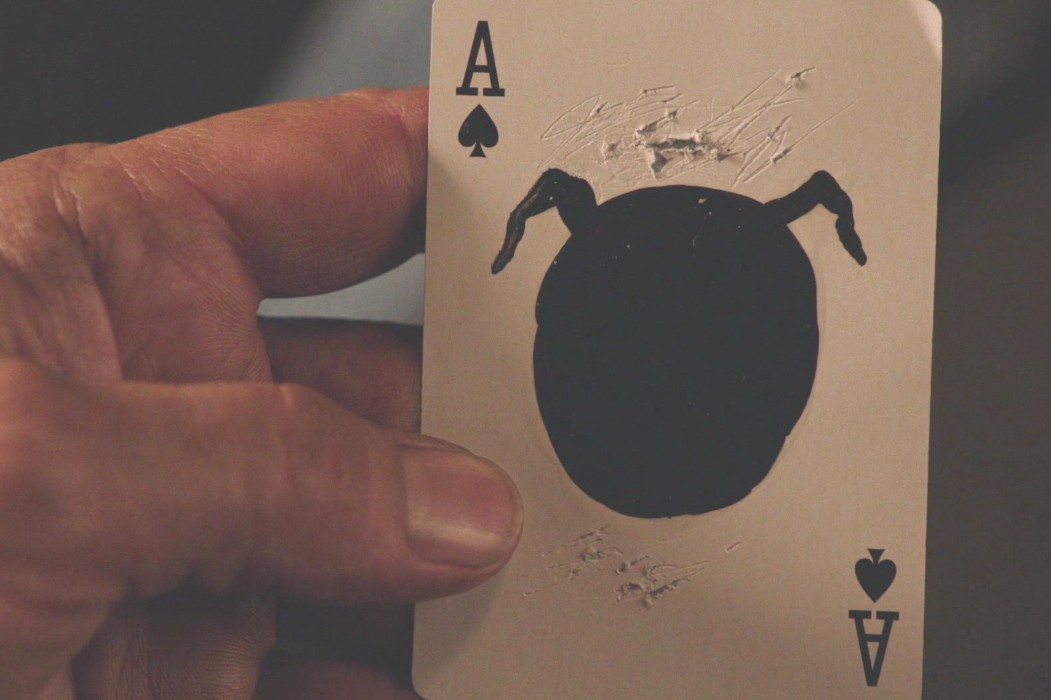
In Part 2, Mr. C produces a playing card — an ace of spades, scratched and overwritten — and tells Darya: this is what I want. The hour names desire. It does not decode the mark.
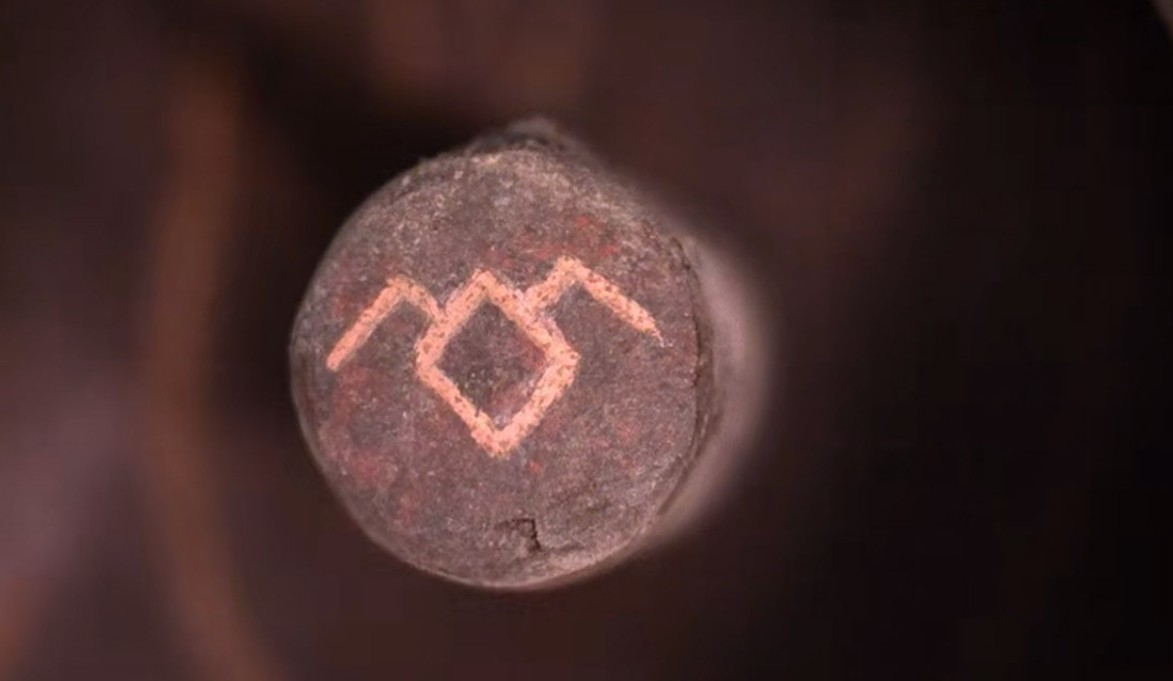
Visually the spade is blacked out and crowned with the owl / twin-peak silhouette that also belongs to the / ring family. White scrapes sit above and below the figure — a card that has been worked, not dealt clean.
Screen record
Named as want
Part 2, room 6. After the recording of Darya and Ray, the card is shown and claimed. Half a million is their price; this is his. Mechanism of what the mark “buys” stays OPEN.
Same figure, three places
Part 11 files the adjacency without collapsing it: the shape appears on this card, above the mountains on the (Hawk refuses Frank’s question), and on Major Briggs’s messaging. Three carriers; one refused name.
Open / held
What he wants
Coordinates, a person, Lodge access, Judy, Jeffries, a door — readings proliferate. Screen supplies only the sentence and the object. Do not promote any one theory to case law.
Spade as death / destiny
Playing-card folklore (ace of spades as death card) is ambient culture, not Twin Peaks dialogue. Useful atmosphere; not evidence.
Owl Cave identity
The scratched figure matches the ring / petroglyph silhouette by eye. That visual rhyme is strong. A spoken on-screen equation (“this is Owl Cave”) is not delivered in Part 2.
How to use the file: the ace exists so The Return can put Lodge cartography into a gambler’s hand — the same weather Hawk will later refuse to name — and still leave the want untranslated. Cross-file Mr. C as the carrier; file the mark here.
A non-ordinary realm associated with fear, desire, and spiritual trial. On screen it is named in prophecy and investigation; its geography is suggested more than mapped. The Red Room / waiting room is the space viewers most often encounter in connection with Lodge passage.
Gordon Cole’s classification for cases that sit outside ordinary FBI procedure — anomalous, occult-adjacent, or otherwise unclassifiable under standard Bureau language. The phrase becomes the archive’s framing metaphor: file the unexplained without forcing a false closure.
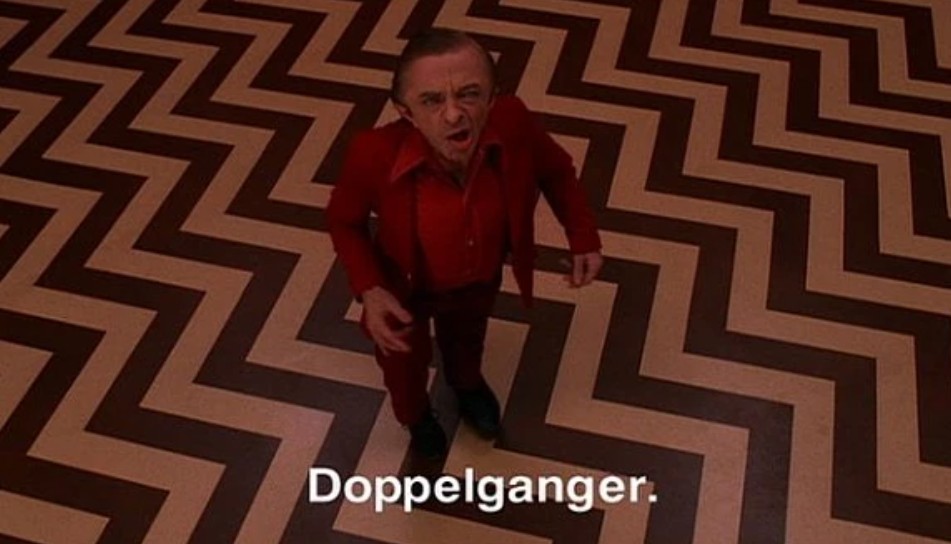
A double that is not a simple copy. In Twin Peaks, doubles expose desire, violence, and unfinished selves. Cooper’s dark double (often called Mr. C) is the clearest screen case; later Return material also introduces manufactured doubles (tulpas), which should not be collapsed into one category.
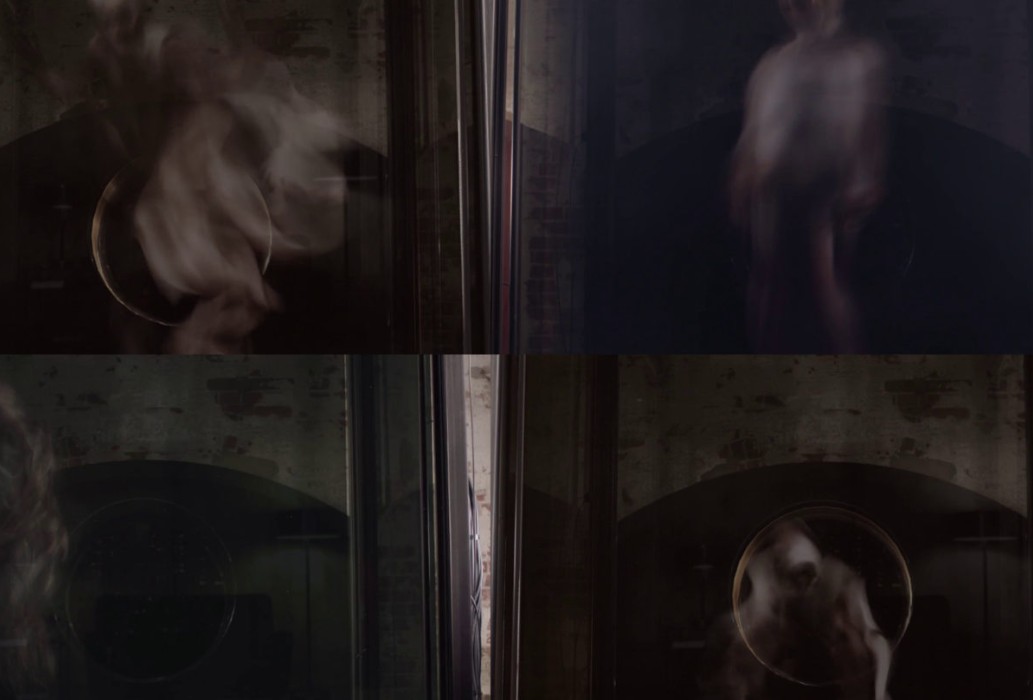
Recurring threshold language: sockets, surges, humming wires, and power failures often mark moments when identity, image, or agency becomes transferable. Screen evidence establishes the motif; reading electricity as a single “system” remains interpretation.
See also · · ·
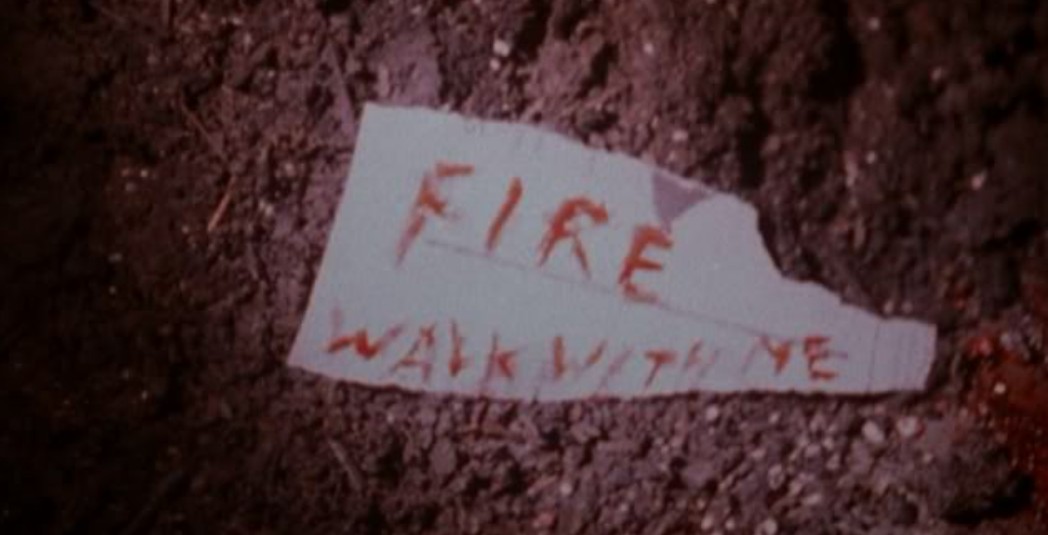
Fire walk with me
Screen
Lodge phrase · film title
A Lodge-associated phrase spoken and written across the screen record, and the title of the 1992 film. It functions less as a slogan than as an invitation or warning at the edge of another order — often near violence, ritual speech, or passage between worlds.
Named on screen as pain and sorrow. It appears as a substance associated with Lodge beings — most famously visualized as creamed corn — and ties suffering to consumption rather than metaphor alone. Exact metaphysics beyond the spoken definition remain open.
Jeffries names Judy in Fire Walk With Me without defining her. Cole later calls Jowday — a name that became Judy — an ancient “extreme negative force.” The Final Dossier expands this as Joudy inside Tammy Preston’s research voice. Linking Judy to the Experiment or to Sarah Palmer is strongly argued but not fully named on screen.
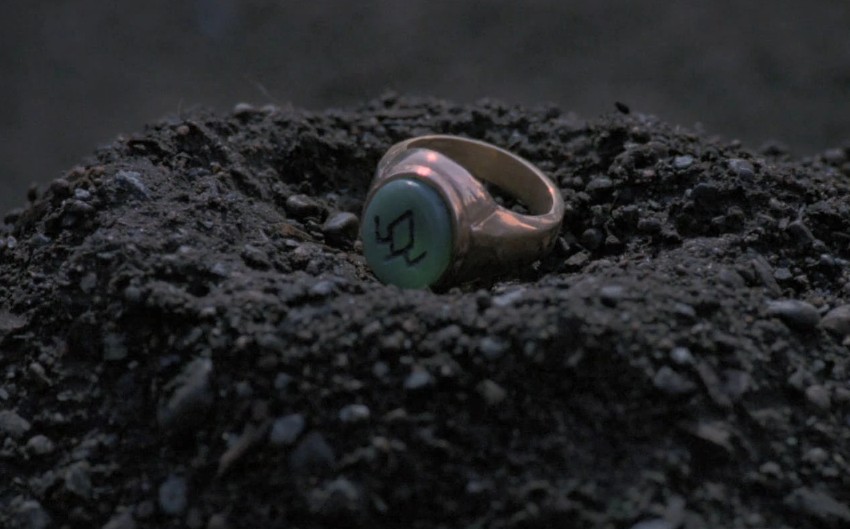
A green Formica ring engraved with a symbol tied to Owl Cave. On screen it circulates among Lodge-adjacent figures and marks danger, ownership, or passage. Theories about its exact rules (who it protects, what it binds) outrun the dialogue; treat mechanism claims as interpretation.
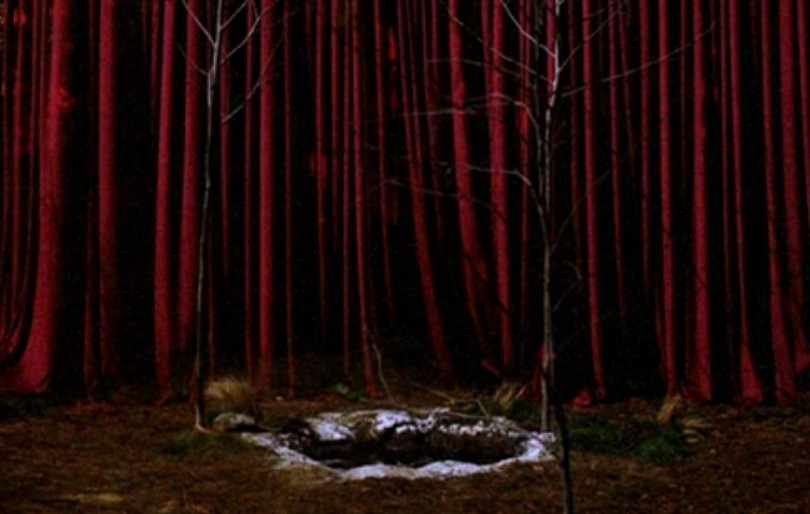
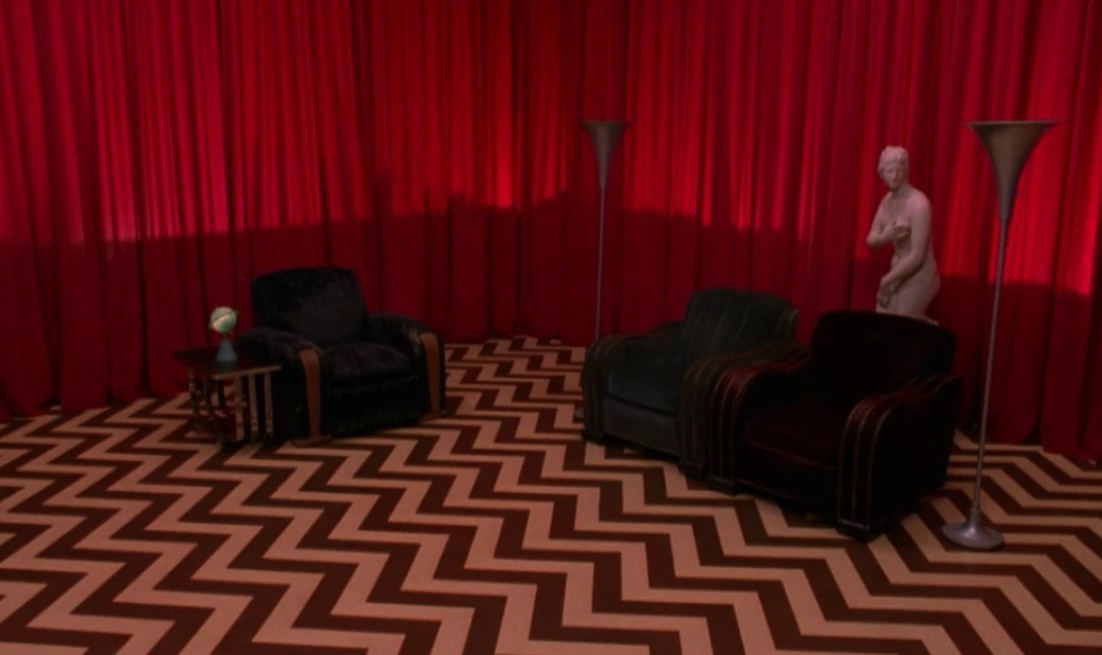
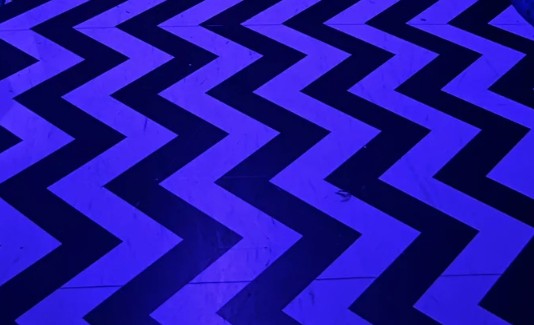
The red-curtained chamber with chevron floor — often called the waiting room — where Cooper first meets the Man from Another Place / the Arm, and where Lodge encounters continue across the series and The Return. It is the archive’s primary on-screen Lodge interior.
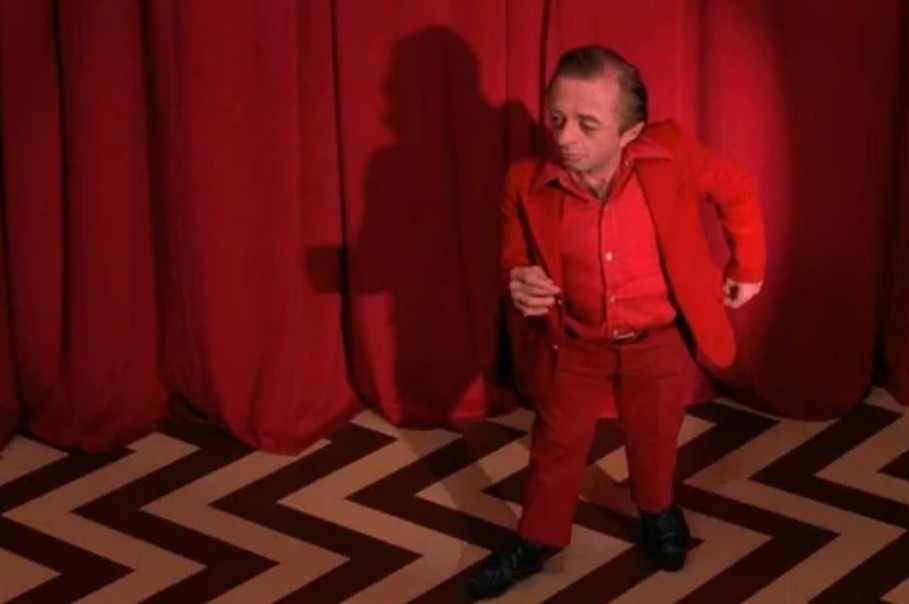
Also known as the Man from Another Place: the small, dancing figure of Cooper’s Red Room visions, later transformed in The Return into a tree-like form that still speaks in Lodge cadence. Closely tied to Mike / the one-armed man storyline and to the phrase “fire walk with me.”
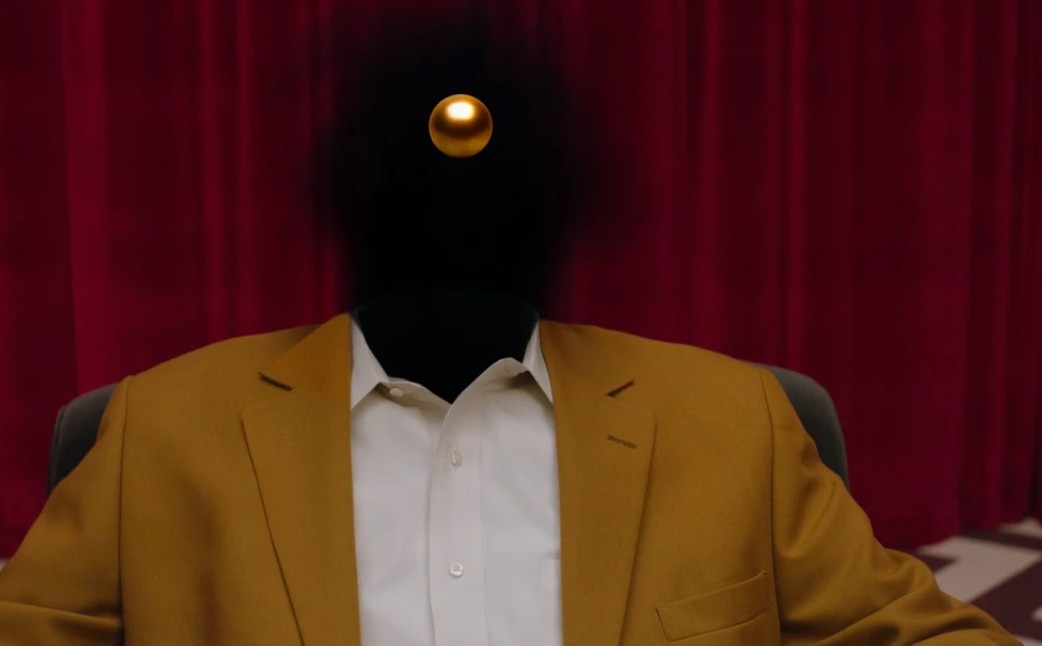
Production and credits name for the featureless entity tied to the glass box killings and to the Part 8 Trinity sequence (including the emission that contains a BOB orb). The series never says “Judy” over this figure in dialogue; the Judy–Experiment identification is inference supported by Frost commentary and dossier lore.
In The Return, a manufactured person — most clearly named around Diane — distinct from a Lodge-born doppelgänger even when both look like someone else. The word imports occult/Theosophical language into Bureau case talk; do not treat every double in the series as a tulpa.
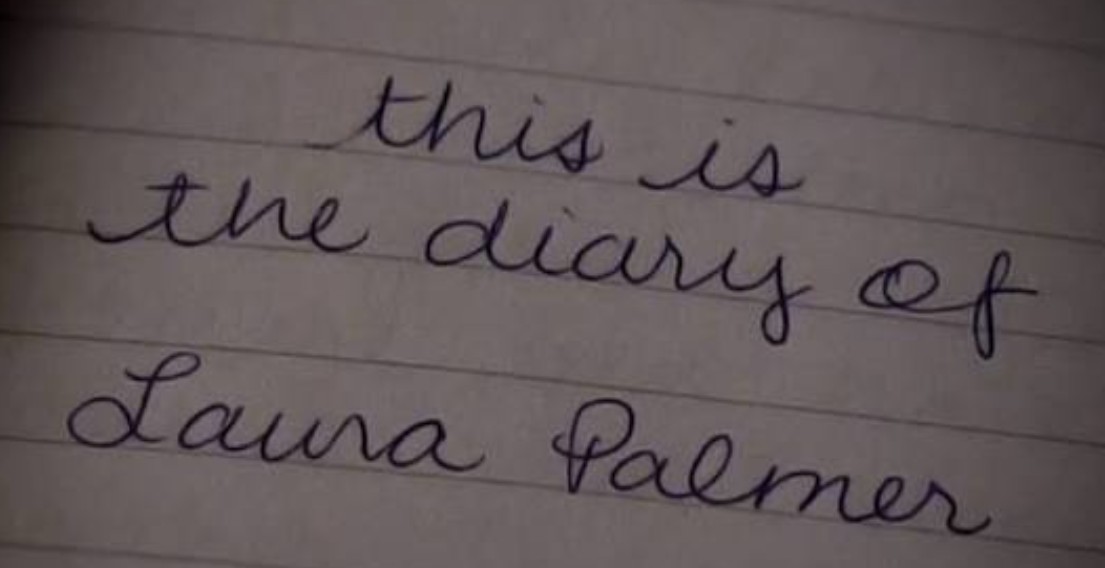
Laura keeps a public diary and a secret one. On screen the secret book is the contested record of BOB: pages about him are torn from it inside the Palmer house; she deposits what remains with Harold Smith — “Nobody will look for it there.” Donna and Maddy later take the book from Harold; after his death it reaches the investigation. Leland already held the torn pages.
In Fire Walk With Me, Annie Blackburn appears to Laura in a dream-crossing and says: “The good Dale is in the Lodge, and he can't leave. Write it in your diary.” Part 7 of The Return recovers that missing page — time-discontinuous communication filed as Screen fact; mechanism OPEN.
Jennifer Lynch's licensed The Secret Diary of Laura Palmer expands interior history in a subjective voice. It is indispensable adjacency and not omniscient Lodge footage — do not cite the book as if it were filmed dialogue.
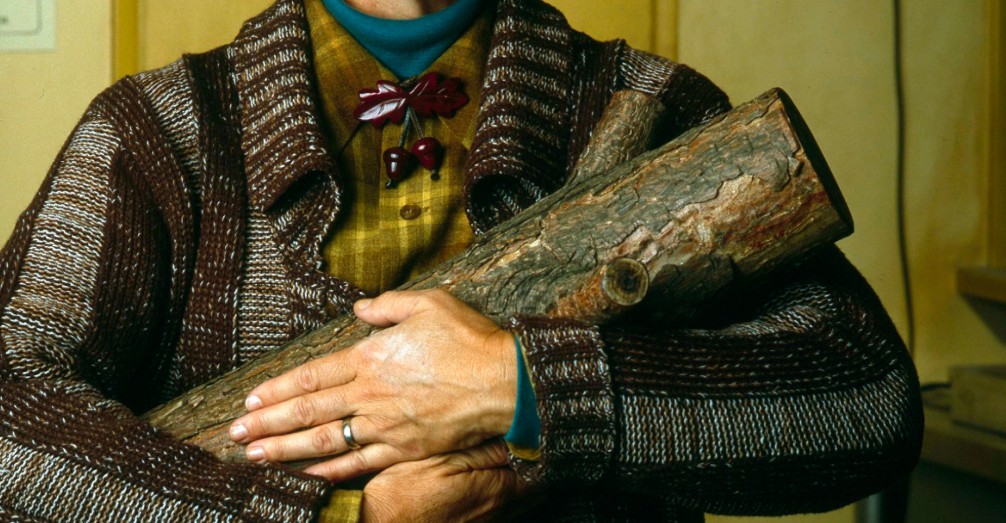
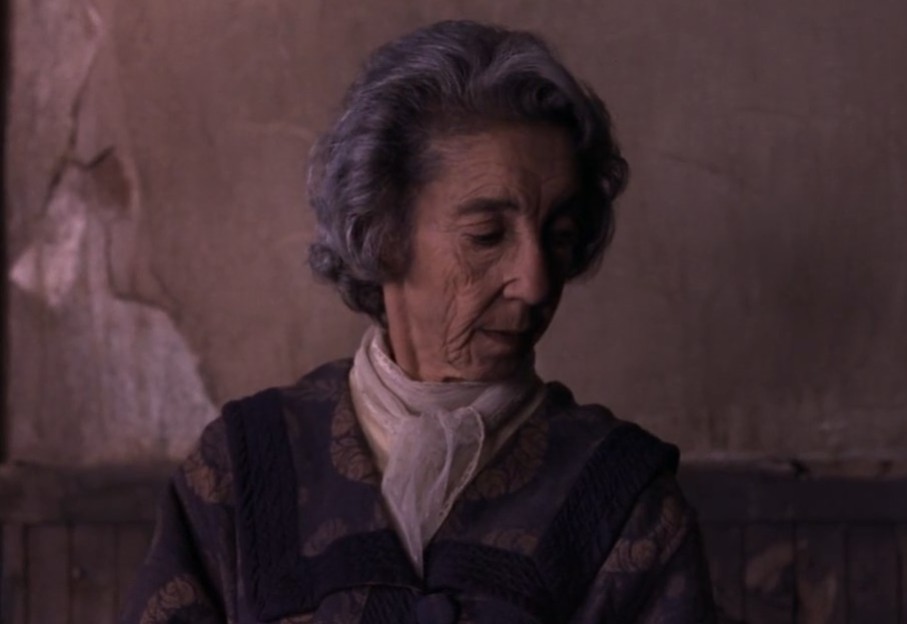
The piece of wood Margaret Lanterman carries is not a prop joke and not a separate character dossier. On screen it is the town’s most socially disqualifying instrument of testimony — and the one Cooper elects to hear. At her cabin she relays what the log “saw” of Laura’s final night: darkness, laughter, silent owls, two men and two girls, flashlights over the ridge, a third man’s steps, a scream farther away. The statement orients the investigation toward the woods cabin. It is testimony, not a camera.
Margaret’s own operational definition: she does not hear the log with her ears; she understands it. Hawk answers that the wood holds many spirits. The series never stamps the log as Sam Lanterman’s soul, as organic memory-storage, or as a Lodge radio. Those remain available readings — and unsupported as Screen mechanism.
Frost supplies origin weather: after Sam dies fighting a forest fire the day after their wedding, Margaret cuts a log from a fallen Douglas fir near where he proposed. Screen states the fire and “met the devil”; the Douglas-fir leaf is dossier. In The Return the log still speaks through her — “Hawk, my log has a message for you” — and at her death she says it is turning gold. Part 1’s archive title uses that first line by convention; it is not an on-screen episode card.
Fire Walk With Me does not stage the log’s point of view. It stages Margaret’s warning to Laura at the Roadhouse — a different evidentiary form. The Bravo introductions (Lynch, 1993) speak in her register outside the 1990–91 plot; supplementary, not Case 89 footage.
The Log exists so Twin Peaks can insist that the official channel is often deaf, and that a true signal may arrive as wood, nonsense, and a woman the town has already dismissed. Cross-file the person at Margaret’s dossier; file the instrument here.
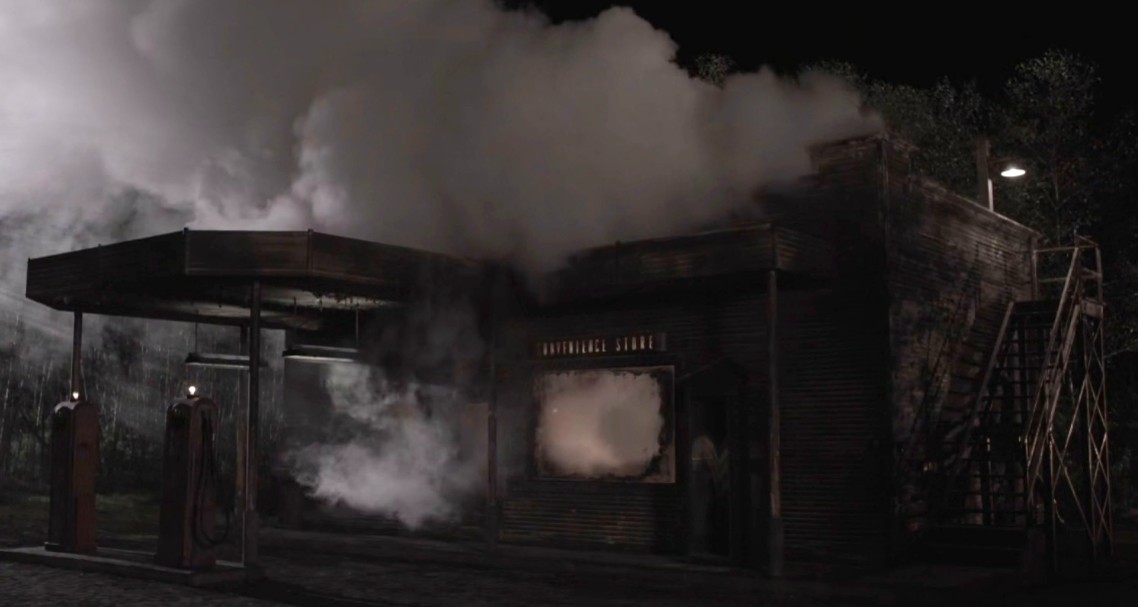
Part 8 · the convenience store in the New Mexico desert
Jeffries’s phrase for a Lodge meeting place “above a convenience store.” Later episodes and The Return deepen the image with woodsmen, ritual speech, and threshold geography without turning the store into a fully explained institution. It remains a named locus, not a complete map.
Named opposite to the Black Lodge in local and investigative lore — associated with love, courage, and spiritual ascent rather than fear. On screen it is discussed more than visited; Hawk’s teachings and related prophecy carry much of the definition. Treat detailed cosmologies built only from interviews or dossiers as expansion, not sole proof.
An inhabiting spirit of hunger and abuse, most famously possessing Leland Palmer. On screen BOB is named, confronted, and shown as both a face of violence and a Lodge-adjacent force. Part 8 later places a BOB orb among the Experiment’s emission — a birth image, not a full biography.
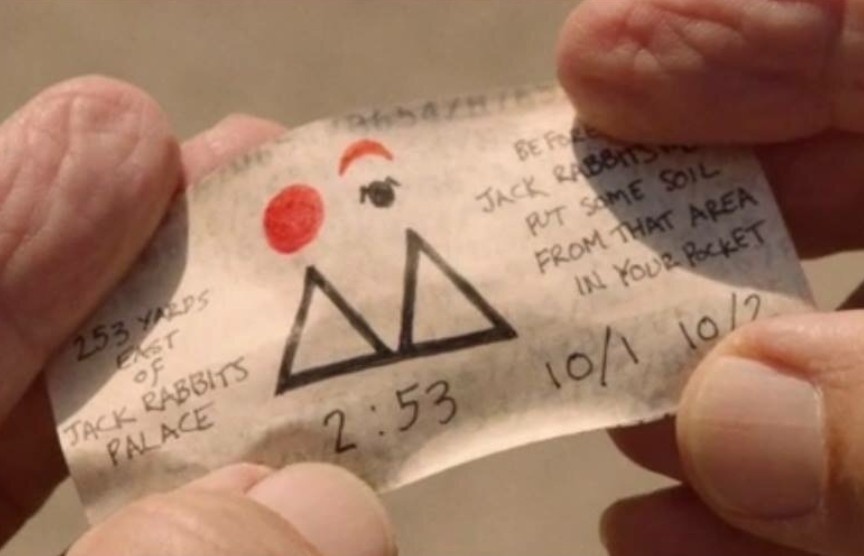
In Part 9, Betty Briggs produces a chair her husband left instructions about. Inside a sealed metal capsule in the leg are two slips. The archive files them together as Briggs's message — not a Lodge prophecy spoken aloud, but a dead Major’s operational note to the living.
Screen record · the slips
First slip · directions
Written instructions: 253 yards east of Jack Rabbit's Palace; before leaving, put some soil from that area in your pocket; dates and a time. The exhibit shows the hand-drawn face of this slip — peaks, marks, 2:53, 10/1 and 10/2.
Second slip · Two Coopers
Letters and figures; the word Cooper appears twice. Hawk reads it: “Two Coopers.” Briggs recorded a doubled Cooper before the town had language for Mr. C.
253
Same figure the season already used as Lodge utterance and watch-face departure. Here it is a paced distance in yards. Clock, measure, and threshold rhyme — mechanism OPEN.
Execution
Part 14: Bobby, Frank, Hawk, and Andy follow the first slip at — soil, 253 yards east, Naido, 2:53, portal. The note works.
Drawn marks · OPEN
Twin peaks · celestial strokes
Two black triangles; red disk; red crescent with a black point. Geographic and sky shorthand on paper. Exact iconography is not captioned in dialogue.
Same figure adjacency
Part 11 places “Briggs’s message” with Mr. C’s and the refused mark above the mountains on the . Three carriers of related weather. Do not force every stroke on this slip into that identity without Screen naming it.
How to use the file: Briggs’s message is how a Listening Post father leaves Blue Rose logistics inside furniture — childhood place-name, soil, yards, a doubled Cooper — and trusts Bobby to become someone who can open the chair. Cross-file the place at Jack Rabbit’s Palace; file the paper here.
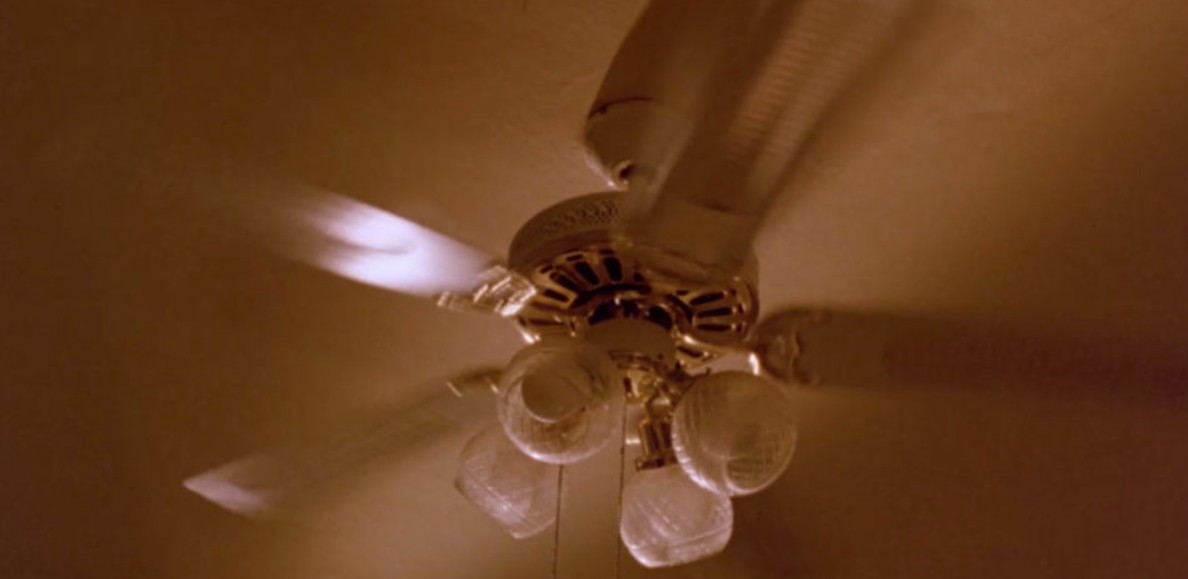
The Palmer house fan is a recurring dread image — sound, motion, and domestic threshold. Screen evidence establishes the motif; readings that treat it as a single occult machine or portal mechanism remain interpretation.
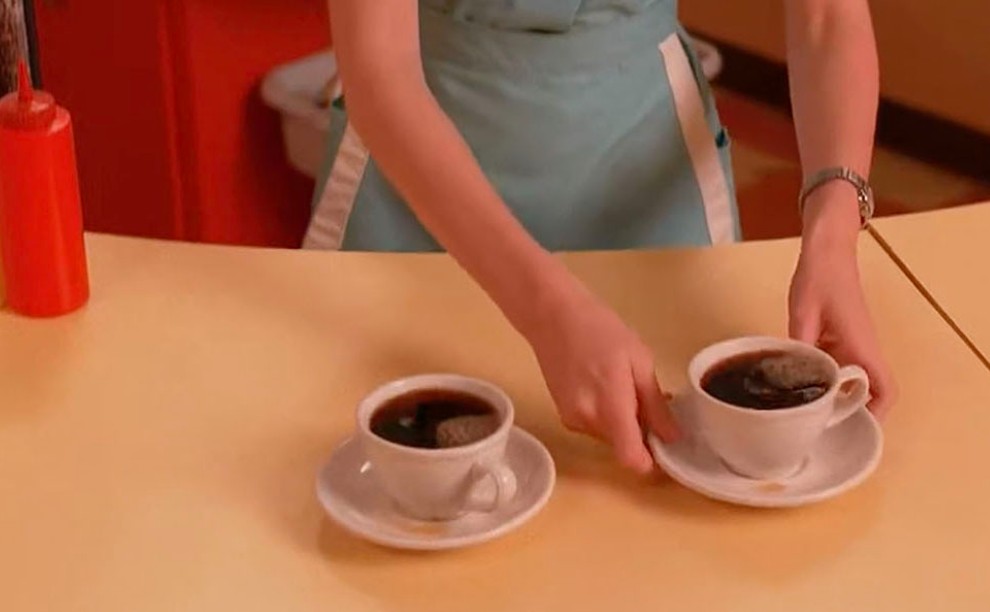
On screen coffee is Twin Peaks’s most ordinary instrument — and one of its most consequential. Cooper’s first hours in town bind investigation to appetite: a damn fine cup at the Double R, dictation to Diane, attention paid to what the town actually serves. Pete Martell’s percolator (with a fish in it) is the same grammar in comic form: the agent still drinks, still notices, still treats the everyday as evidence.
In the Season 2 finale Waiting Room the coffee will not hold one state — solid, liquid, tar. Before the Lodge shows Cooper anything frightening, it destabilizes the pleasure he has trusted all series. The archive’s reading, supported by the hour’s staging: it is a test of whether the ordinary world still obeys.
In The Return Part 4, after Cooper has lost method, vocabulary, rank, and Laura, the first word that returns unprompted is “Coffee!” — from Dougie’s mug, spat out because it is hot, then smiled over. Biography is gone; the reflex remains. The series had framed his enthusiasm as a joke about seriousness. Part 4 files it as load-bearing.
Coffee is not a Lodge entity and not a code to crack. It is the archive’s name for a method: reception through ordinary pleasure, and the proof that when that channel fails or returns first, something essential about Cooper — and about how Twin Peaks listens — has been shown.
In Mark Frost’s dossier material, “dugpas” names a lineage of black magicians / left-hand practitioners drawn into the wider occult history around Twin Peaks. This is Frost expansion language, not a term the original series defines on screen. Do not treat it as interchangeable with BOB or Judy without labeling the leap.
Hawk’s teaching: when you confront the Black Lodge with imperfect courage, the Dweller on the Threshold appears — fear made into an opposing self. The phrase frames Lodge trial as moral and spiritual, not only geographic.
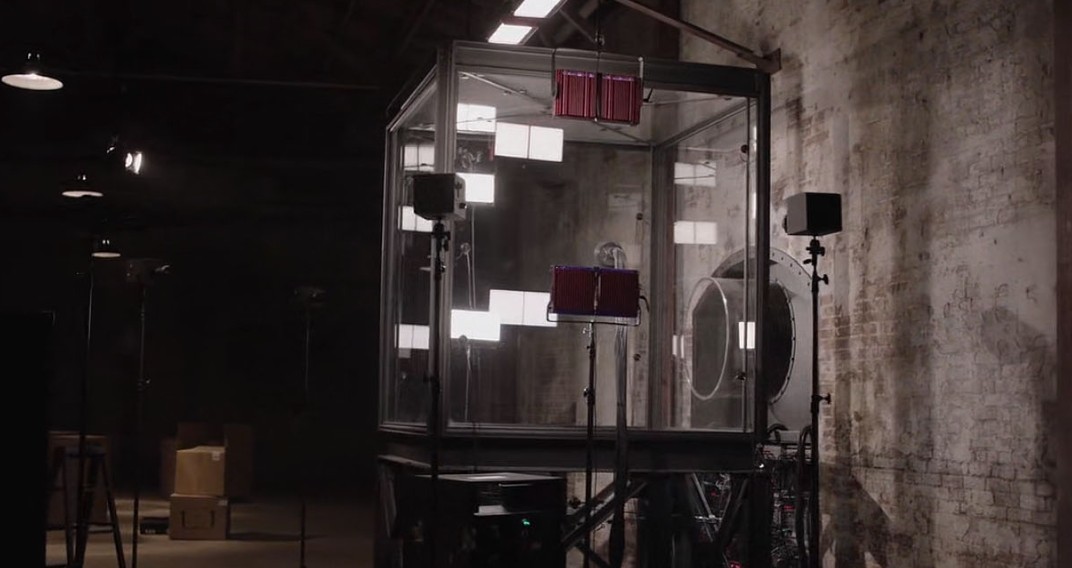
The New York glass box monitored at the start of The Return. Something enters and kills; credits associate the entity with the Experiment. Theories that Mr. C built the box specifically to trap Judy are inference — powerful, but not spoken as fact on screen.
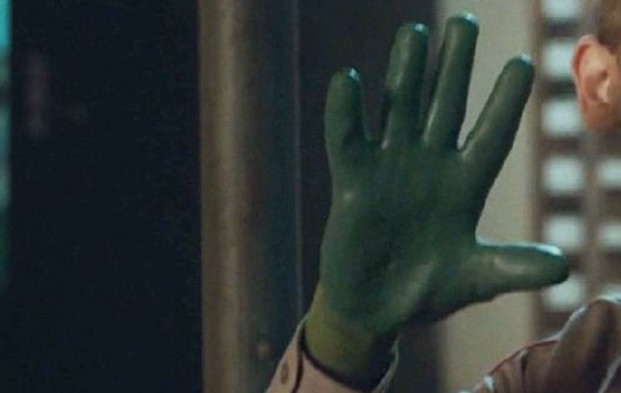
Freddie Sykes’s glowing green glove in The Return — a gift/weapon associated with the Fireman’s design and used against Mr. C. On screen it works; its metaphysics stay largely unexplained beyond the fight itself.
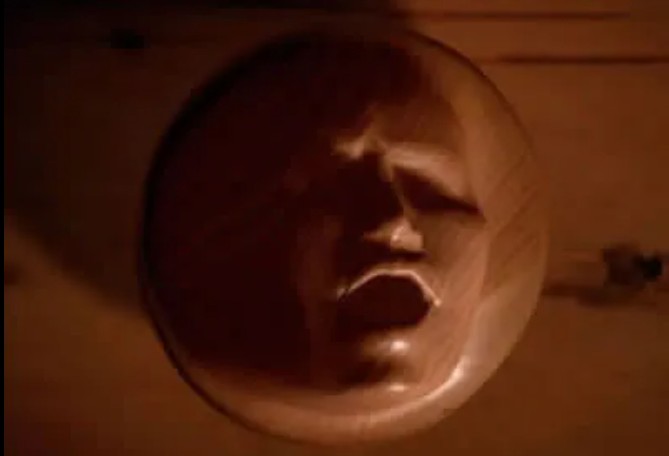
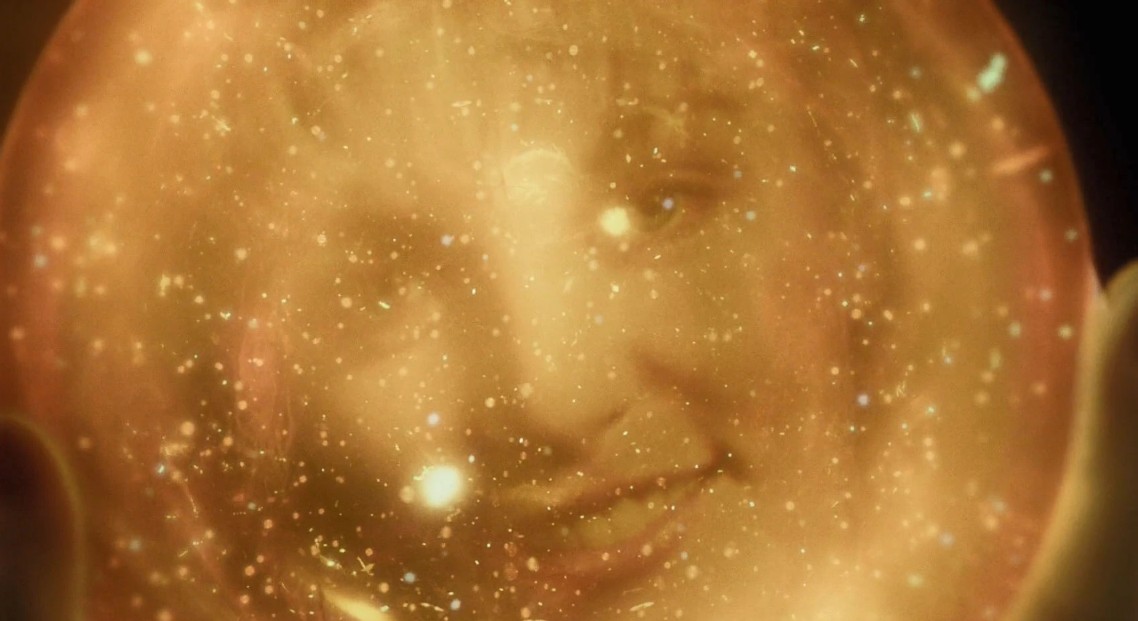
In Part 8, after watching the White Sands detonation footage, the Fireman rises and emits a stream of gold. In that gold a sphere forms containing Laura Palmer's face. Señorita Dido takes it, kisses it, and releases it earthward through a horn-shaped apparatus. The same hour shows a separate orb bearing BOB's face inside the Experiment's emission — staged symmetry, not a spoken equation.
Nothing in dialogue names the object “golden orb,” states that it is Laura as ontology, or explains the tube's destination. “Countermeasure,” “created soul,” and “the Fireman's ward” are interpretive labels. The archive files the image as designed correspondence and keeps mechanism OPEN.
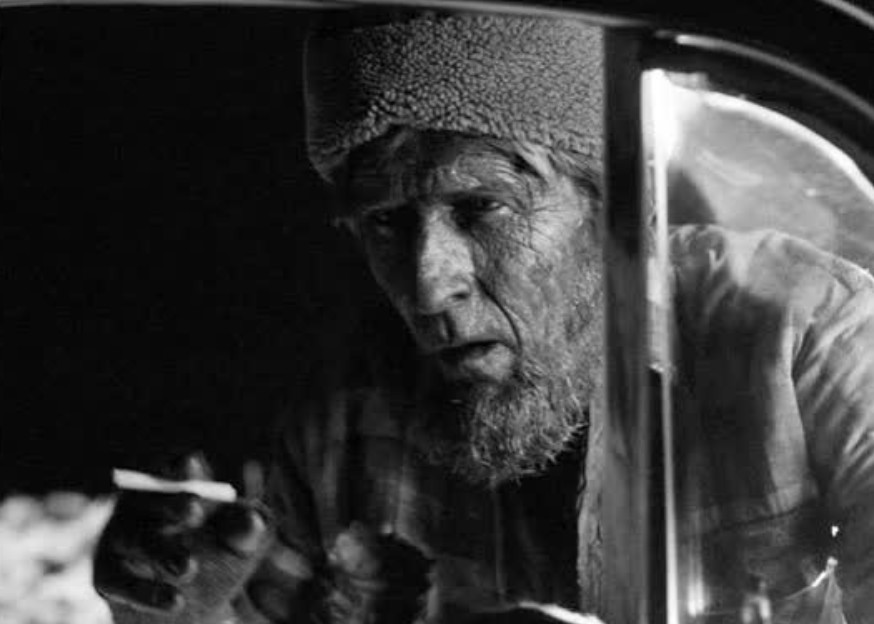
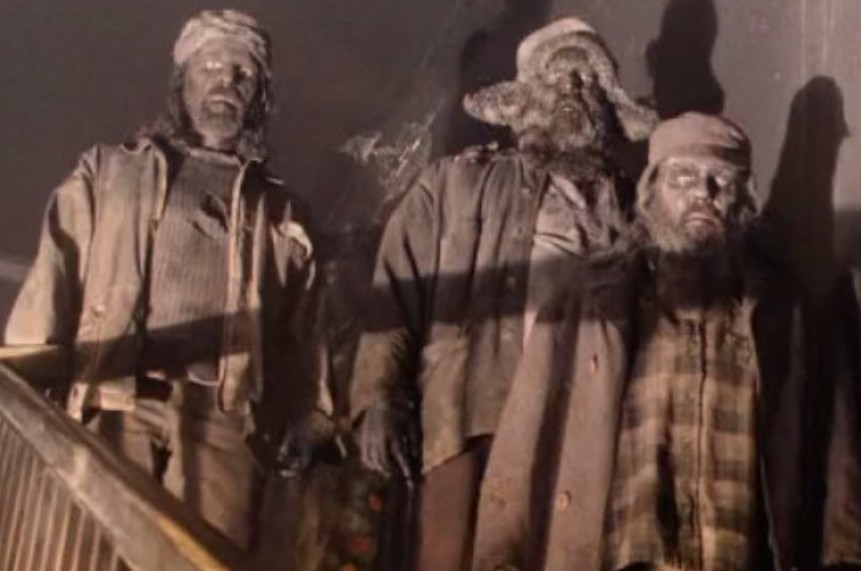
On screen in Part 8 (card: August 5, 1956, New Mexico), two Woodsmen stop a car on a night road. One leans to the window and asks the driver and his wife: “Gotta light?” The couple get away. It is the Woodsmen’s only spoken line in the hour — polite, ordinary, the phrasing of a man cadging a cigarette.
The same words title the Part 8 dossier by archive convention (first-line naming). They are not an on-screen episode title card. Later the Woodsman who takes the KPJK microphone does not repeat the question; he broadcasts a different text.
Read against fire walk with me: Twin Peaks’s oldest Lodge formula asks for fire as companionship or passage; here the entities who run on fire must ask for a light at a car window. Characterisation by appetite made polite — not a decoded spell. Mechanism OPEN beyond what is staged.
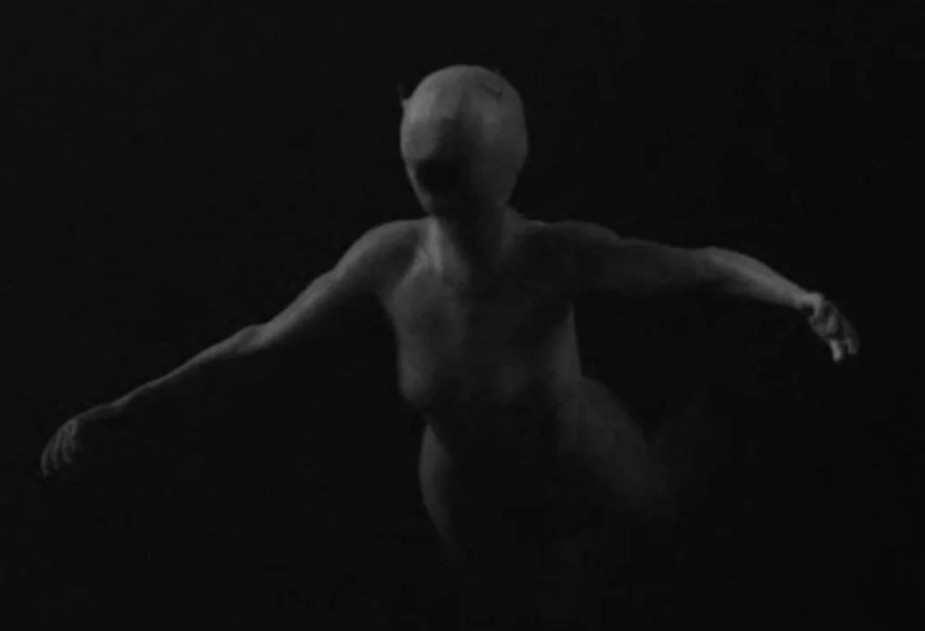
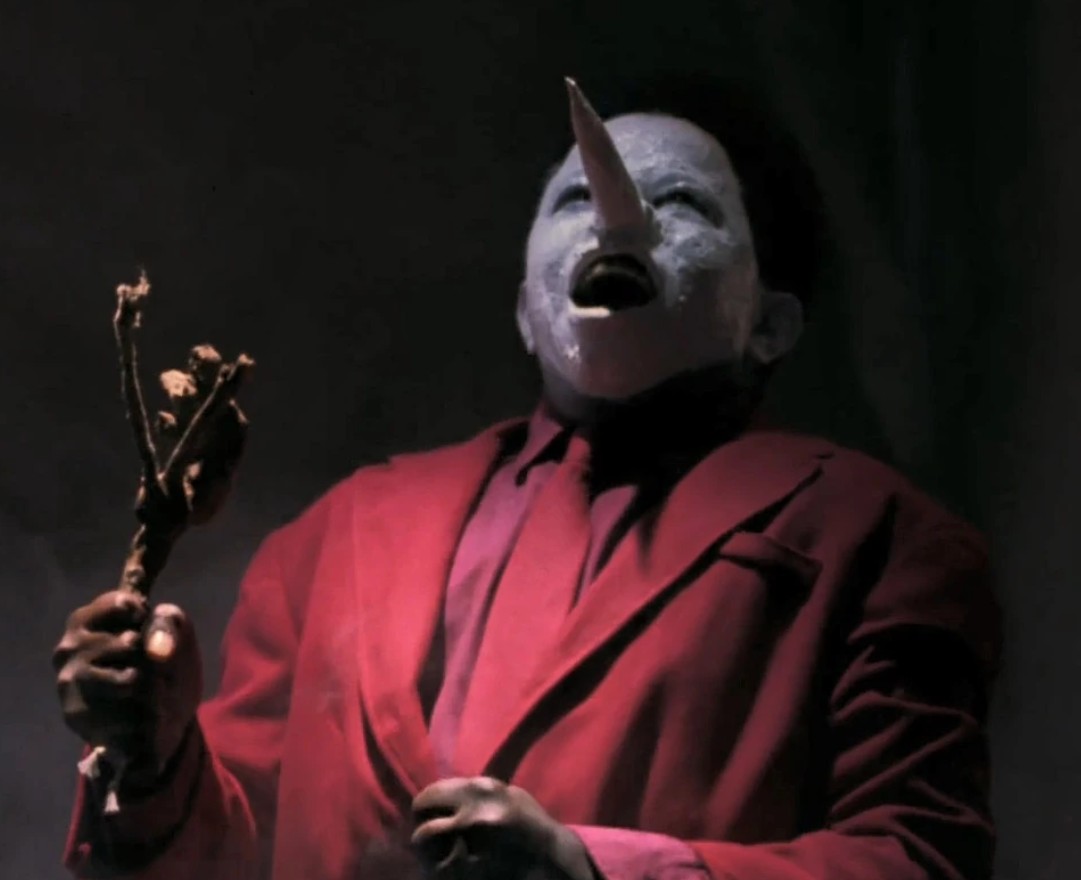
A masked, leaping Lodge figure seen in Fire Walk With Me and again in The Return. Screen presence is clear; identity and function (ritual actor, resident, omen) remain largely unnamed. Avoid collapsing him into Judy or BOB without labeling speculation.
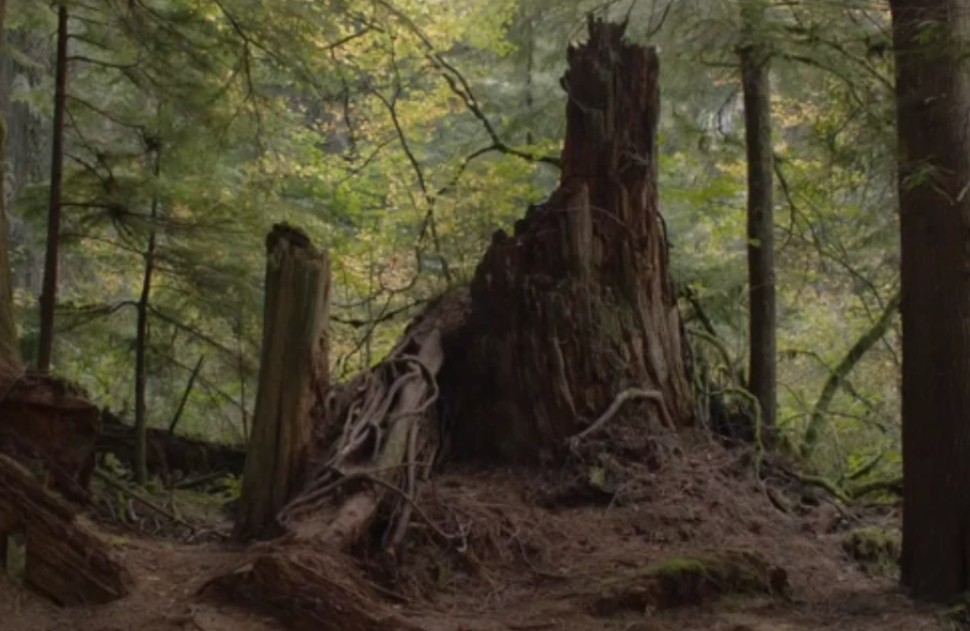
A stump clearing in the Twin Peaks woods — Bobby Briggs's childhood name for the place — that Major Briggs's long-held instructions send the sheriff's party to in Part 14. Frank Truman, Hawk, Bobby, and Andy Brennan pocket soil as directed, pace 253 yards east, and find a pool with vapour and a naked, eyeless woman (Naido). Frank checks the time: 2:53. A portal opens; Andy is taken to the Fireman, shown a sequence of images, and returned carrying her.
The site is a Lodge threshold located by coordinates and childhood memory, not a mapped institution. What the stump “is” beyond meeting-place and clock — why 2:53, why soil in the pocket — remains OPEN on screen.
The Final Dossier keeps a plate of the stump under the same name beside Cooper's Lodge night aftermath. Filed HELD as Frost condensation, not as a second Screen map.
Fan shorthand for the purple/mauve realm where Cooper meets the evolved Arm and later finds Jeffries — a non-ordinary space of machinery, numbers, and transit. The series shows the place more than it names it; “Mauve Zone” is useful index language for that sequence of rooms.
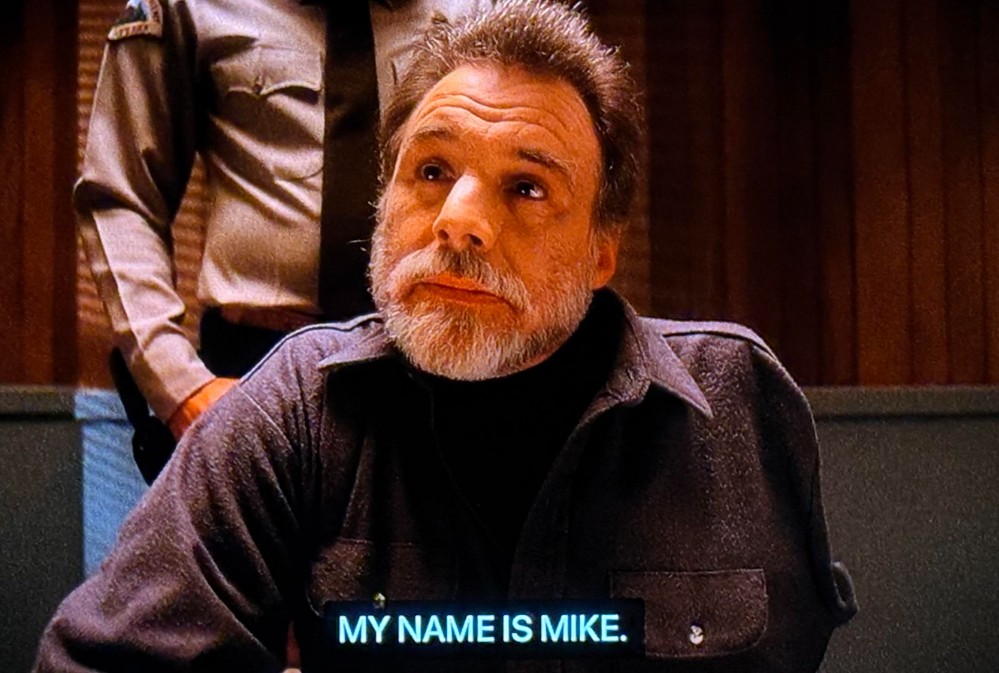
The inhabiting spirit once partnered with BOB, later opposing him. On screen MIKE speaks through Philip Gerard, the one-armed shoe salesman, after cutting off the arm that held BOB’s influence. Closely tied to the Arm / Man from Another Place and to the “fire walk with me” liturgy.
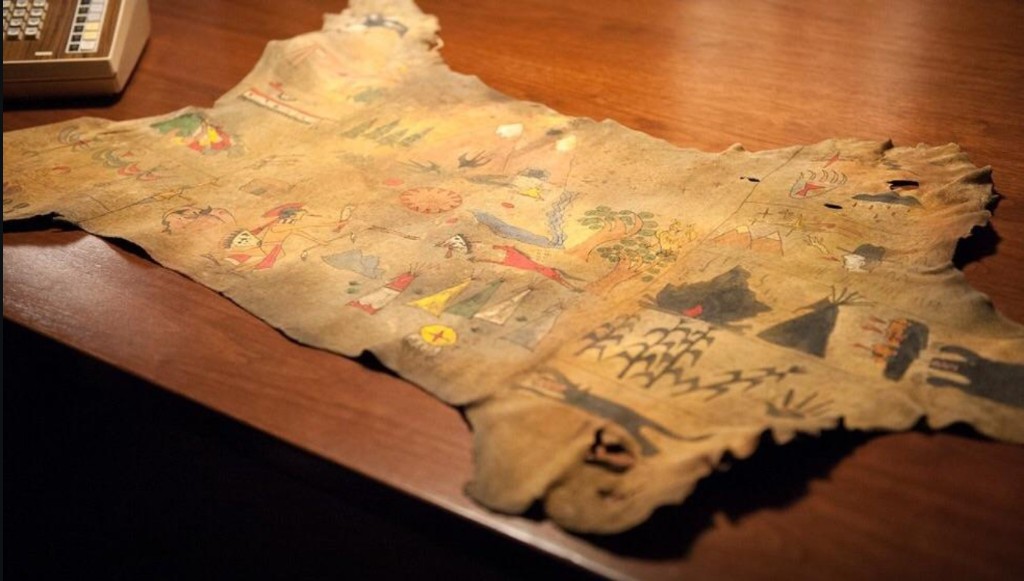
In Part 11, Hawk unrolls an old Nez Perce map for Frank Truman. It is not, he says, an ordinary map. It is a living thing — it speaks to whatever is happening at the time it is being read. Colloquially: Hawk’s map. Formally: a tribal cartography the sheriff’s department is finally allowed to hear.
Do not collapse this object into the (stone petroglyph, Season 2) or into Frost’s lost Twisted Hair / Lewis elk-skin chart. Related weather, different files.
Screen-led readings · Hawk’s gloss
Fire
Hawk names a fire mark and glosses it as standing for something like modern . The season’s sockets, pylons, and Part 8 radio weather already run on current; the map has been saying so longer than the Bureau.
Black corn
Hawk: corn stands for sustenance. Archive adjacency (not a spoken equation on the hide): has been plated as creamed corn since FWWM — pain filed as food. The map’s word is meal, not metaphor.
Black fire
Fire + black corn together make a third thing: black fire. Transport and appetite in one glyph — the most economical Lodge cosmology anybody speaks aloud in The Return. Mechanism beyond Hawk’s gloss: OPEN.
Mark above the mountains
Frank points and asks. Hawk: you do not want to know. The hour does not decode it. Screen adjacency only: the same shape appears on Mr. C’s and on . Three documents, one refused name.
Living document
Not a static atlas. Hawk’s definition is operational: the map answers the present tense of the reading. How that works is not explained; the refusal to treat it as dead paper is Screen fact.
Open / visual legend
What the hide shows, carefully. These are high-confidence picture matches or community readings — not Hawk’s spoken dictionary unless marked above.
Twin peaks
Two mountains — commonly Blue Pine and White Tail as geographic fix. Useful overlay; not labeled in the Part 11 dialogue.
Tipis / camp
Painted lodges in red, yellow, green — dwelling / people on the land. Social geography, not a Lodge floor plan.
Corn rows
Stalks in series — the visual ground under Hawk’s “black corn / sustenance” gloss. Color and “disease” readings in fan literature stay Interpretation.
Evergreen block
Dense dark trees — forest weather / Ghostwood adjacency. Path, not a street map.
Horse and riders · figures
Travel, hunt, witness — narrative ledger figures. No Screen ID for individual persons.
Bird figure
Spread-wing bird near the peaks — often read as hawk or owl. Attractive rhyme with Hawk’s name and the owls motif; not spoken as either. OPEN.
Sun / weather marks
Disks, clouds, rain — sky time. Calendar function is plausible; exact day-reading systems are fan astronomy unless Screen supplies them.
Animals at the margin
Buffalo and other creatures on the hide — land economy and threat. Do not force Part 2’s televised buffalo kill into this paint without a stated link.
Frost adjacency · HELD
Twisted Hair’s chart
The Secret History describes a Nez Perce chief’s map on white elk skin given toward Lewis & Clark country — falls, twin mountains, owl/spirit warning, and the ring never to be worn. That lost chart is dossier weather. Hawk’s Part 11 hide is Screen. Related people, related ground, not proven identical object.
Production note: the on-screen map was painted by Michael Horse (Hawk) in a ledger-art tradition — story told in pictographs, not a Western comic strip read left-to-right. That is craft context for how to look; it does not authorize every symbol into Screen vocabulary.
How to use the file: the Nez Perce map exists so The Return can put Lodge physics into a language older than Blue Rose — fire, corn, black fire — and still refuse the one mark Frank asks about. Cross-file Hawk as the reader; file the document here.
A cave in the woods north of Twin Peaks. The investigation finds a petroglyph matching the composite mark Cooper drew from Briggs’s and Margaret Lanterman’s scars. Andy’s pickaxe opens the wall; a stone rod bearing the ring mark emerges; later work exposes the full . Owls attack the chamber. Site first — cartography filed separately.
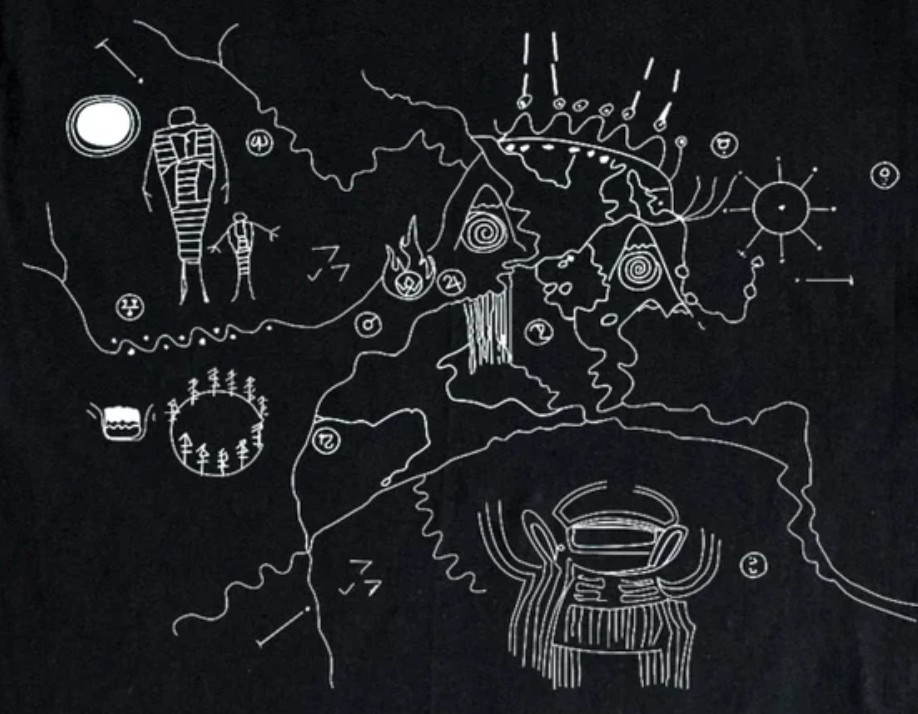
Petroglyph · map and calendar · OPEN where unmarked
The full carving revealed behind the Owl Cave wall after the rod is turned: a diagram the investigation treats as both map and calendar for Lodge access. Screen confirms the timetable language (Jupiter meeting Saturn) and the destination geometry (Glastonbury Grove). Most individual glyphs are never named in dialogue — the archive files them as OPEN readings, not as a closed key.
Screen-led readings
Jupiter & Saturn marks
Andy first reads certain circle-glyphs as 4-H emblems; he is corrected — they are the astrological signs for Jupiter and Saturn. Briggs, under duress, had already said the visitors come when those planets meet. Map and testimony converge on a conjunction window. Which circled mark is which planet is not spoken; the visual catalog below places ♃ right of the fire and ♄ right of the tree circle. Mechanism of “why planets” stays OPEN.
Circle of trees
Read against Twin Peaks topography as the twelve sycamores of Glastonbury Grove — the place where red curtains open when the window arrives. The investigation’s destination, not a tourist caption carved in English.
Flame field (completed wall)
When Andy opens the earlier petroglyph, the flame portion of the carving fills with a second figure. The wall is a device with states. That completed fire-and-figure cluster sits at the heart of the later map; exact identity of the inner mark is not spoken.
Ring mark / rod
The stone rod that emerges carries the same design as the green Owl Cave ring — Frost’s dossiers often call it the jade ring; Screen never mineral-IDs the stone. The map and the ring are one symbol family; the ring’s rules remain Interpretation.
Open / interpretive legend
These are high-confidence visual matches used by the archive and the fandom. They are not stamped as Screen dictionary entries unless dialogue names them.
Twin peaks + spirals
Central double mountain with spirals inside each summit — the town’s namesake skyline as cartographic anchor. Spirals: lodge weather, path, or decoration — OPEN.
Waterfall lines
Vertical hatch between / below the peaks — commonly White Tail Falls as a geographic fix. Useful for overlay; not labeled on screen.
Oil / vessel mark
Small cupped form near the tree circle — often read as the scorched-oil pool at the Grove (Log Lady: oil leads to a gateway). Strong adjacency; not a spoken caption on the stone.
Planetary circles · visual catalog
The map carries small circled sigils at fixed landmarks. The community catalog matches what is drawn on the stone — and matches traditional planetary glyphs — but only Jupiter and Saturn are named on Screen (Andy). File the rest as Interpretation, not Bureau ID.
♅ Uranus
Left of the tall / short human figures (upper left).
♆ Neptune
Above the smaller standing figure.
♂ Mars
Left of the flame field.
♃ Jupiter
Right of the flame field — Screen-named pair with Saturn; landmark placement is visual catalog.
♄ Saturn
Right of the circle of trees — Screen-named pair with Jupiter; landmark placement is visual catalog.
☿ Mercury
Left of the radiating sun disk (far right).
♀ Venus
Right of the radiating sun disk.
♇ Pluto
Beside the waterfall hatch under the twin peaks.
♁ Earth
Beside the large horned / radiant figure at the bottom.
Sun / moon / rain-dome
Solid disk near the figures (often read as moon/sun), radiating sun at far right, dotted arc at top — celestial weather or time-marks. Calendar function is Screen-led via the conjunction; exact sky-glyph names beyond the Andy pair are not.
Standing figures (tall / short)
Paired humanoids at upper left — watchers, initiates, or Lodge agents. No on-screen ID.
Horned / radiant figure
Large bottom-center form with radiating lines — sometimes read as owl, spirit, or threshold guardian. Remains OPEN; do not collapse into BOB or the Fireman without evidence.
Chevrons & paths
Directional marks and wavy connectors — route, river, or ritual path. Navigation aid in reading; not a named road system in dialogue.
How to use the file: the map exists so Twin Peaks can put Lodge logistics into stone — where and when — without turning the carving into an encyclopedia. Fear and love open doors in Hawk’s Lodge teaching; that ethic is adjacent to the Grove ordeal, not a caption printed on every glyph. Cross-file the chamber at Owl Cave; file the diagram here.
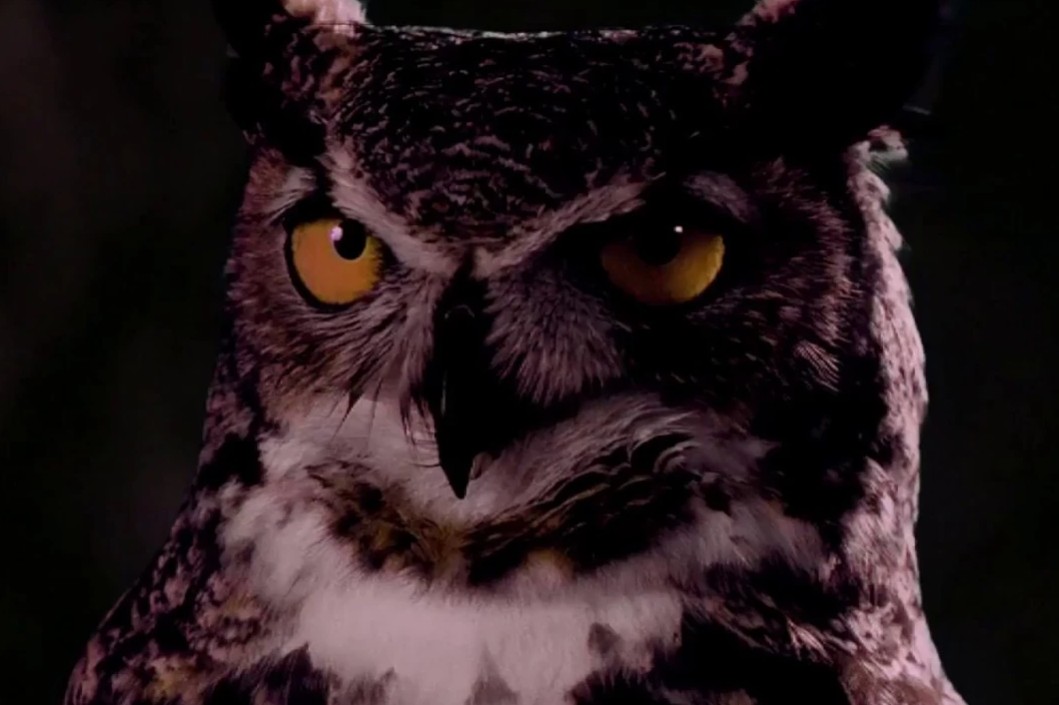
“The owls are not what they seem” — the Giant’s warning to Cooper — makes owls a standing omen of Lodge surveillance and misdirection. Screen evidence repeats the birds and the line; exact zoology (hosts, cameras, spirits) is interpretation.
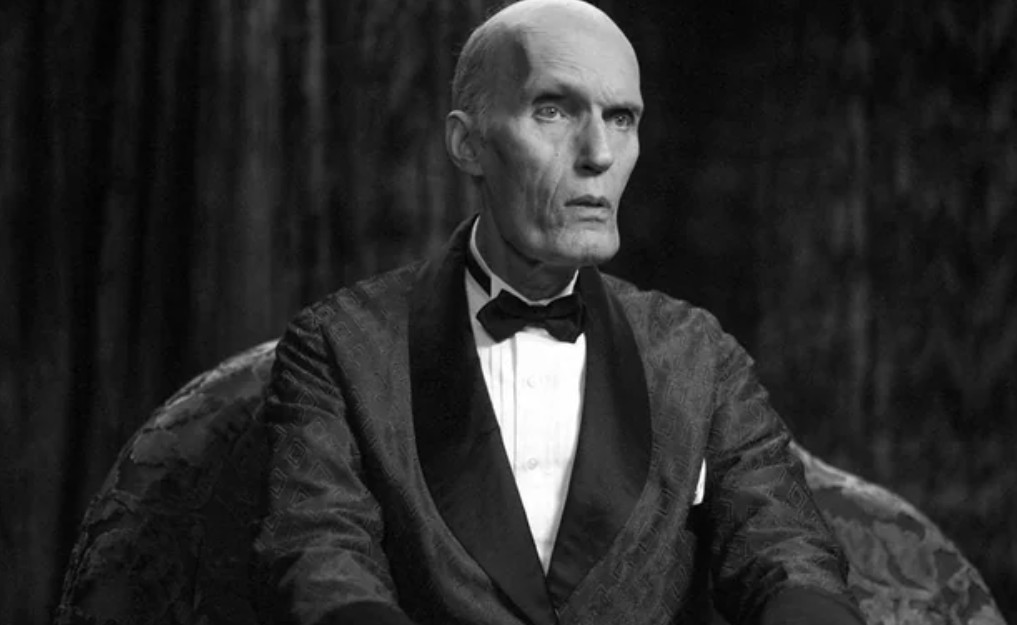
Formerly called the Giant: a towering Lodge ally who warns Cooper, later revealed in The Return as the Fireman of a fortress-like realm. Associated with ???????, Laura’s golden orb (handled and released by Señorita Dido in Part 8), and interventions against extreme negative force — still more guide than fully explained deity.
Recurring grandmother/grandson names tied to creamed corn, disappearing houses, and Lodge adjacency — Mrs. Tremond / Chalfont and the boy who offers “corn.” In The Return the names resurface around the alternate Palmer address. Pattern is screen-solid; single unified identity remains interpretive.
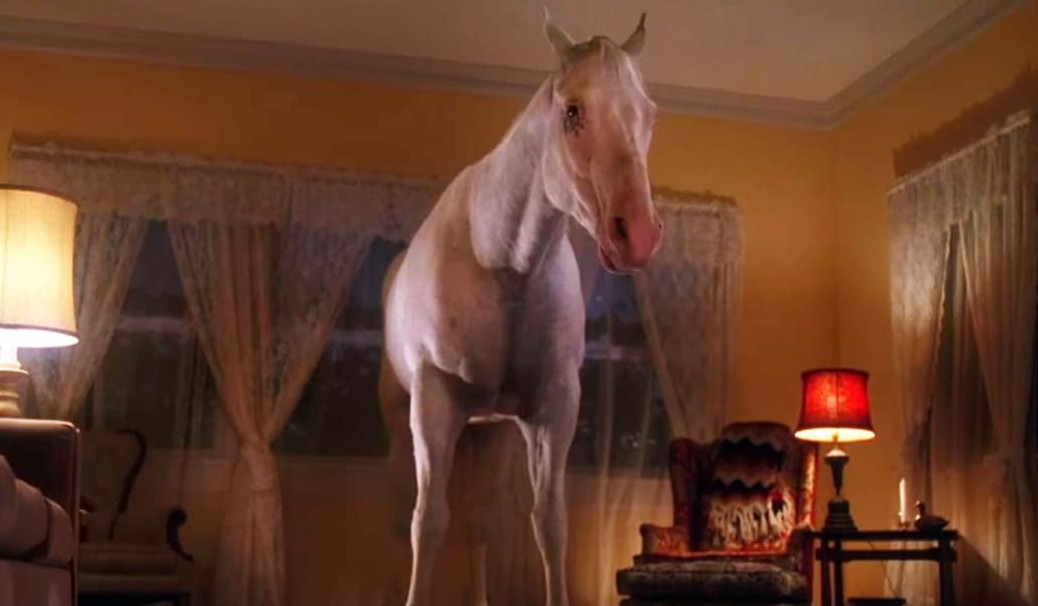
A pale horse appears to Sarah Palmer at moments of dread — often read as omen, visitation, or Lodge signal inside the domestic frame. Major appearances follow sedation in Fire Walk with Me and before Maddy’s murder in “Lonely Souls.” The image is unmistakable on screen; its precise agency is not spelled out.
Soot-blackened, murmuring figures tied to Part 8, radio takeover, and Lodge aftermath. Their only spoken line on the New Mexico road is . They appear as operators of dread rather than named characters — extraction, repetition, and contamination of ordinary media.