First stretch of the deep file: how the dossier opens, then the early years from Lewis & Clark through Owl Cave and the young town (→ 1927). Read it like the front of Frost’s book — first the keepers of the papers, then the years themselves.
Before any year-date: the book introduces its keepers. Then the years begin.
FROM THE BOOK
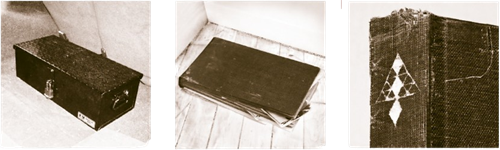
The object before the years: lockbox, ledger, mark.
00.1HELDFrost dossier
The Archivist opens — “start at the beginning”
Secret History · Opening Statement
The book does not open like a novel. Someone calling themselves the Archivist has stacked a ledger — clippings, letters, journals, ephemera — in time order, with no title page, no table of contents, no index. The first charge is blunt: start at the beginning. Mystery is not a distraction from the work; it is the ground of the work. Facsimiles arrive without a narrator’s hand holding yours; chronology itself is the claim. What you are reading is already an argument about how history should be kept — and who is allowed to keep it.
Inside the story the ledger is a real object (Bureau lockbox / dossier). The Archivist’s name is withheld at the opening on purpose. Later archive work — and the shape of what follows — associates the compilation with Major Garland Briggs. Hold the object; keep the compiler’s identity provisional until the file itself forces the point.
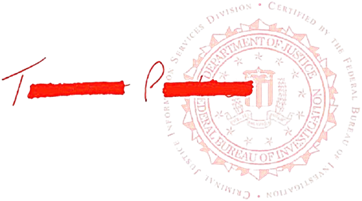
Special Agent Tamara Preston is assigned to read the ledger for the Bureau. She does not rewrite it. She annotates: verifying some pages against known archives, flagging others as doubtful, initialing the margins TP. In the physical book those notes sit beside facsimiles and clippings the way a field agent’s pencil sits beside evidence. She is the first clear FBI voice the reader trusts enough to argue with — and the voice that will later inherit the Archivist’s chair in The Final Dossier. Arc 01 holds her as reader; Arc 05 holds her as author.
Read Frost material as narrator-limited. The Archivist can be incomplete, theatrical, or wrong; Tammy’s job is partly to catch that — and she does not catch everything. Her later book, The Final Dossier (2017), is a separate follow-up after this ledger ends. It is not a date inside Arc 01’s early years.
The file’s first dated ground: Lewis & Clark enter the country that will later hold Twin Peaks — and the dossier already starts arguing with its own paper.
01.1HELDFrost dossier
Clark’s journals — Nez Perce country, September 1805
20–21 September 1805
The dossier opens its chronological spine with excerpts from the Corps of Discovery journals — Clark’s hand, September 20, then the next day’s continuation. The passage records the expedition’s first meeting with the people later called the Nez Perce (French trappers’ name; the people’s own name is Niimíipuu). Historically that first contact is tied to Weippe Prairie, in present-day Idaho — not eastern Washington, though Twin Peaks weather sits not far north of that corridor in the fiction. The following day the same guides take Clark farther downriver to meet another chief: Twisted Hair.
Tammy’s margins matter here. She confirms the September 20 text against the well-known published journals; paper and ink look period; she even contacts the National Archives about whether the sheet is a remarkable facsimile or the original itself. An expert later verifies the September 21 section as Clark’s handwriting and a known published entry — noting that the commanders had split the party days earlier to hunt for provisions.
This is the dossier’s clean historical floor for contact and journal trail. Geography in Frost’s framing (“not far south of Twin Peaks”) is fictional placement; Weippe Prairie / Idaho is the historical locus. Twisted Hair enters the file as a named guide. Later “Sky People” linkages in the dossier are Frost mythology — not an academic claim about Niimíipuu history. No Lodge doctrine is spoken yet.
A letter from Lewis to Jefferson — 25 September 1805
Dated 25 September 1805 · authenticity disputed
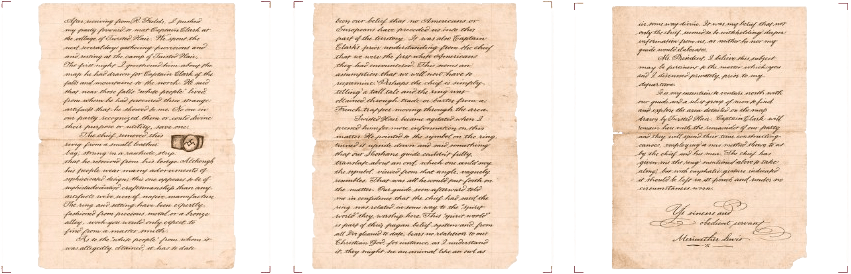
Days after the Nez Perce meeting, the dossier drops a different kind of paper: a letter dated September 25 from Meriwether Lewis to President Thomas Jefferson. In the physical book it appears as facsimile handwriting across multiple torn pages. After meeting R. Fields (or Frazer, in some readings of the hand), Lewis pushes forward to Clark at Twisted Hair’s village. They rest and gather provisions. The first night Lewis questions the chief about a map Twisted Hair drew for Clark — falls and mountains to the north. Near those falls, Twisted Hair says, “white people” lived; from them he procured three strange artifacts.
Of those artifacts the party can make sense of only one. Twisted Hair takes a ring from a small leather bag on a rawhide strip. Lewis sketches it: master-smith metalwork, and in the setting the mark that — turned upside down — the chief links to an owl and to the local “spirit world.” That claim forces Lewis to rethink the assumption that no Americans or Europeans preceded them here; Clark had understood they were the first white Americans the Nez Perce had met. Twisted Hair grows agitated when pressed. Lewis then tells Jefferson the subject may be germane to their private conversation before the expedition. He intends to go north with a guide and a select party to explore the mapped country while Clark stays to build canoes. The chief gives him the ring to take — with an emphatic gesture that it be left in the forest and under no circumstances worn. The letter closes: “Yr sincere and obedient servant, Meriwether Lewis.”
Exhibit · full letter pages (facsimile). Twisted Hair’s map · three artifacts · the ring (owl when inverted) · spirit world · private charge to Jefferson · side trip north · “under no circumstances worn.”
Contaminated as Bureau-clean history: Tammy finds no copy in the known L&C journals or in Lewis’s verified Jefferson correspondence. She calls the whole letter “problematic.” And yet — it looks like a hoax on its face while handwriting analysis points strongly to Lewis; she sends paper and ink for dating tests. Hold the paradox. The claims inside (private charge, missing journal days filled by this northward errand, Twisted Hair’s ring and owl mark) stay live leads into Owl Cave and “falls and twin mountains” — and toward the green ring the screen will make famous, including the warning never to wear it.
Beside the disputed Lewis letter, the dossier sets an excerpt from a journal found among Jefferson’s private papers — undated, tentatively late 1805. Again the physical book often shows facsimile pages rather than a tidy transcript. Tammy’s later tracking of related Jefferson material leads her toward a Monticello cache of “lost” unbound manuscripts (discovered 1870, later buried in high-clearance Library of Congress holdings): Freemasonry, Illuminati panic, and Jefferson’s fascination with supernatural strands of Native American mythology among the strange subjects.
A presidential-side echo from the same season — not proof that the Lewis letter is genuine. Handwriting and chemical tests are again invoked in the dossier’s orbit of these papers; official presidential filing still does not bless them. Treat as LEAD: the White House mind is in the pile, talking in the same weather as Lewis’s problematic letter, without closing the case.
Hero’s return, governor’s fall, Natchez Trace night — and a public suicide story the dossier refuses to leave alone.
02.1HELDFrost dossier
Grinder’s Stand — 10 October 1809
10–11 October 1809 · Natchez Trace
After the Corps returns as heroes, Jefferson makes Lewis governor of the Upper Louisiana Territory. Two hard years follow. On the night of October 10, 1809, Lewis arrives alone on horseback at Grinder’s Stand on the Natchez Trace — about seventy miles southwest of Nashville — still governor, headed toward Washington. The dossier’s inquiry says he carried two purposes: to fight State Department denials of his expenses, and (more secretly) to deliver evidence of corruption in the Louisiana Territory to Jefferson and the new president, Madison.
Priscilla Grinder admits him. He is armed — pistols, rifle, knife, hatchet. He eats little, paces, smokes, talks to himself “like a lawyer,” rants about enemies, and worries a small leather pouch on a rawhide loop around his neck. He refuses the bed she makes and sleeps facing the door with his pistols. Near three in the morning she hears struggle, a shot, more violence. Major James Neely — the guide who brought Lewis from Fort Pickering, posted (unbeknownst to Lewis) under General James Wilkinson’s influence — becomes the key transmitter of the suicide story. Jefferson accepts Neely’s version in public. Suicide becomes the default narrative.
Death at Grinder’s Stand and the official suicide ruling are on the historical record. Cause is not closed inside this dossier. The pouch, the missing papers, Neely’s later possession of Lewis’s weapons and watch, and Wilkinson’s shadow all stay attached to the night.
The Archivist piles counter-evidence. A congressional committee language later says Lewis “almost certainly died at the hands of an assassin.” A carpenter who built the coffin reports a wound in the rear of the skull — awkward for a marksman-suicide story. Mrs. Grinder’s moonlight testimony collides with moon-phase records: no moon that night. The “Russell letters” to Jefferson contradict each other — one warm and purposeful near the death, another (appearing years later) painting derangement and suicide attempts in a style that smells, to the Archivist, like cover for Wilkinson.
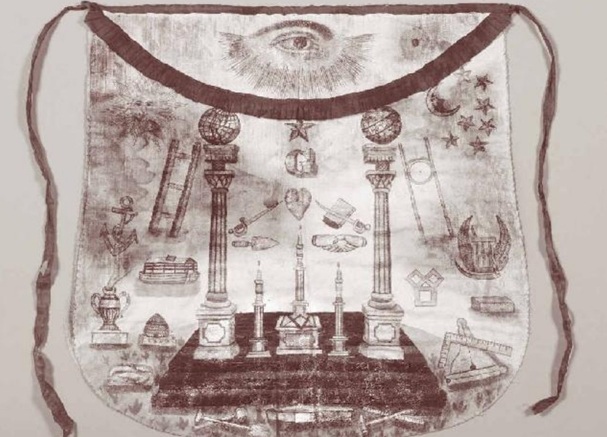
Possessions arrive rifled. Money, pistols, knife, watch, horses go missing; Neely is seen wearing Lewis’s arms and watch. Expedition journals and the corruption evidence Lewis meant for Washington vanish in part. A bloodied Masonic apron survives with unshakable provenance — and modern testing in the dossier’s account says the blood is not Lewis’s, but two unidentified others. Local oral history claims a murder charge against the Grinders and “parties unknown” was returned then dropped from fear; the Grinders later leave Tennessee with sudden money.
Exhibit · Lewis’s Masonic apron (dossier). Returned to his mother by Jefferson; now held by the Grand Lodge in Helena, Montana. The Archivist’s testing says the blood on it is not Lewis’s.
Still OPEN. Suicide remains the public default. Assassination — with Wilkinson’s network in the wings — is a live competing file, not a finished Blue Rose verdict. Tammy verifies many of the hard historical anchors while remaining wary of the Archivist’s fullest conspiracy architecture.
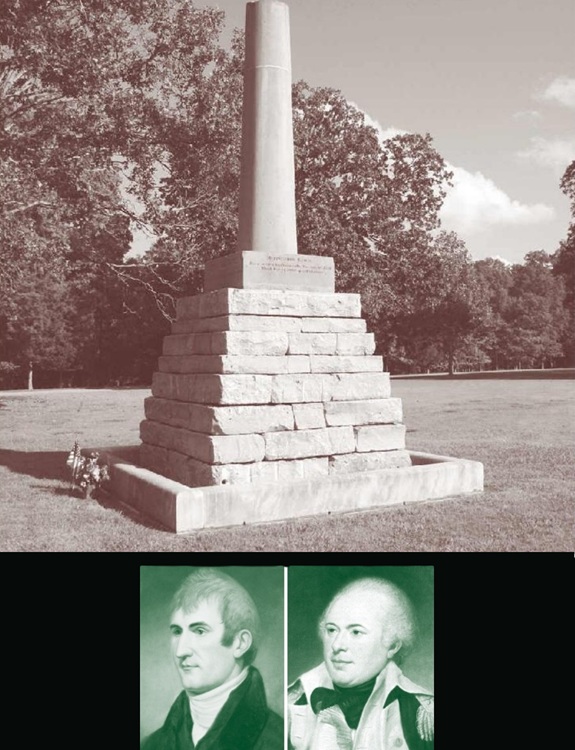
Exhibit · Natchez Trace monument. The broken column marks a life cut short — the dossier’s visual coda to Grinder’s Stand. Below: Lewis beside the man the Archivist casts as his shadow, General James Wilkinson.
02.3LEADFrost dossier
“The place by the falls and the twin mountains”
Archivist’s conclusion · echoed again in 1877
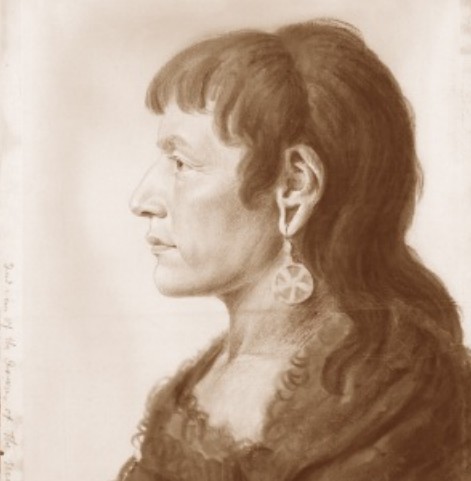
In closing the Lewis chapter, the Archivist argues that Jefferson sent Lewis west not only for a Northwest Passage, but to watch for strange rumors of the region — “white Indians,” giants, vanished civilizations, quasi-mythical beasts. He ties Lewis’s Northwest experience to a vision-quest–like encounter at a place later glossed as by the falls and the twin mountains. The Mandan chief Sheheke-shote (“Big White”) — pale, blue- or green-eyed, enormously tall — becomes part of the same weather of claims when Lewis brings him east to meet Jefferson.
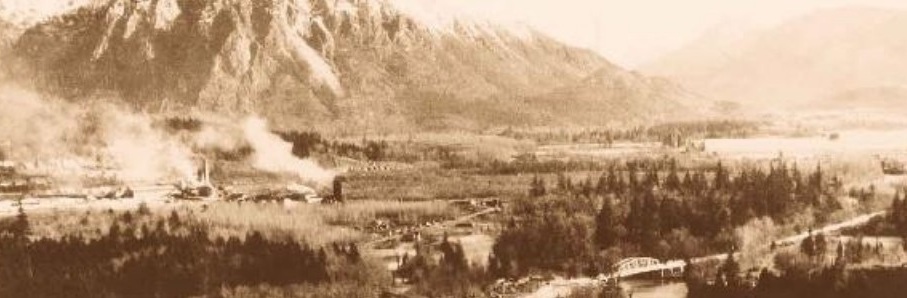
Exhibit · Chief Sheheke-shote (“Big White”). Mandan leader Lewis escorts east to Jefferson — pale, tall, blue- or green-eyed — folded into the Archivist’s weather of “white Indian” claims.Exhibit · the place by the falls and the twin mountains — early Twin Peaks weather. The locus Lewis’s letter points north toward, and that Joseph’s pilgrimage will rhyme with in 1877.
LEAD toward Twin Peaks country as sacred, contested geography — the same locus the file will echo with Chief Joseph. Not Lodge cosmology yet. Not Case 89. A place-name and a charge from the president’s secret curiosity, held as dossier argument rather than surveyed fact.
Gold, broken treaty, pilgrimage, tunnel through the mountain, surrender — and the rhyme with Lewis’s place.
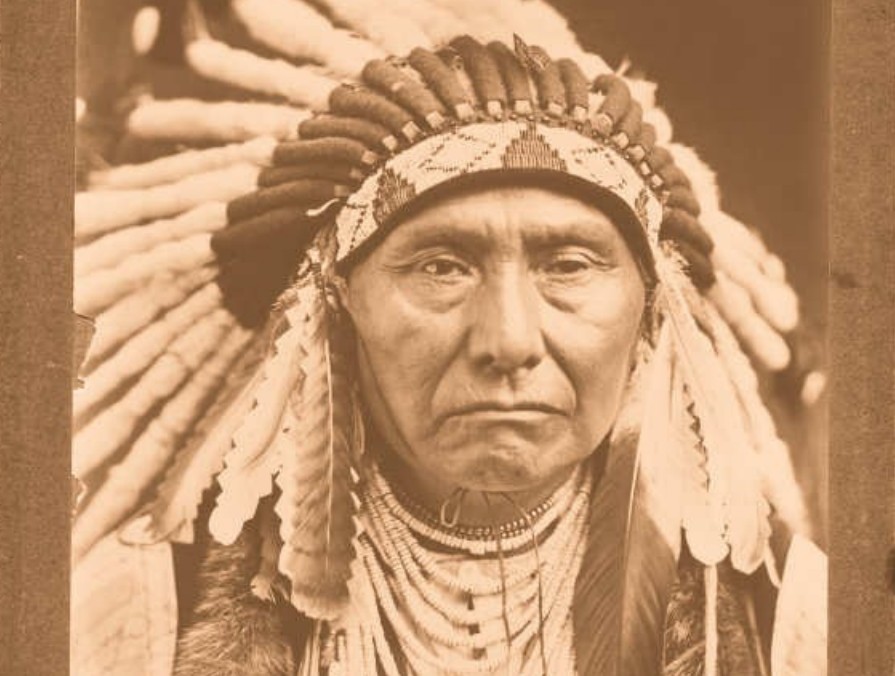
Exhibit · Chief Joseph. The ledger’s 1877 stretch follows his people from Wallowa through the retreat to Bear Paw — and asks whether his pilgrimage rhymes with Lewis’s place by the falls.
03.1HELDFrost dossier
Wallowa Valley — gold, broken treaty, retreat
1870s → summer–autumn 1877
Gold is found in the Wallowa Valley — traditional Nez Perce homeland, the people first met by Lewis. The government claims the valley via a treaty with another tribe and sends General Oliver Howard to remove them: a direct violation of the existing Nez Perce treaty. After Joseph refuses, hostilities escalate. To avoid slaughter or a reservation pen, he leads more than seven hundred people — only about two hundred fighting men — on a fighting flight toward Canada.
Tammy verifies the core outline and Joseph’s refusal statement. The Nez Perce had not been a “hostile tribe” toward settlers; Joseph’s prior role was closer to spiritual leader than general. The retreat that follows — thirteen battles or skirmishes against thousands under Howard — becomes, in the dossier’s telling, one of the great tactical withdrawals in the continent’s military history.
Held as history inside the dossier: gold, treaty breach, Howard’s brigade, the flight. The metaphysical reading of Joseph’s pilgrimage sits in the next card.
03.2LEADFrost dossier
Pilgrimage before the retreat — “Sky People”
Summer 1877 · speech · Howard’s “tunnel”
Before the retreat, Joseph speaks to his people in language the Archivist and Tammy hear against Northwest “Sky People” myth cycles — ancient relationships with mysterious beings above. Tammy links the pilgrimage site to the place Lewis visited with Chief Twisted Hair, an ancestor line into Joseph’s world. After that mysterious return, the untrained military leader becomes the commander of the great retreat.
Howard’s August 1877 dispatch to Miles adds a stranger tactical detail: Joseph seems to travel “through the mountain itself” by a dry torrent bed like a gigantic rough railroad tunnel; water had run there days before; a dust cloud decoys the troops; afterward a river flows again. The dossier lets that stand beside the Sky People speech without forcing a single explanation.
LEAD. Sacred geography and anomalous passage are suggested, not scientifically closed. Tammy remains explicitly secular in the margins — “show me the science” — while still marking the rhyme with Lewis.
After eleven weeks, never having lost a battle against a vastly superior force, Joseph is surrounded in the Bear Paw Mountains — about thirty miles from Canada. After five days, eighty-seven warriors remain. Rather than risk the surviving women and children, he surrenders. The speech to Howard — “I will fight no more forever” — is verified in Captain Wood’s account: cold, no blankets, children freezing, heart sick and sad.
What follows is also in the file: unheated railcars to Fort Leavenworth, then Oklahoma confinement where epidemic disease kills over half; years of petitions and meetings with presidents; a slow transfer to a Washington reservation shared with remnants of other tribes. Joseph never sees Wallowa again. He dies in 1904; his doctor’s phrase is “broken heart.” The Archivist’s closing question returns to Lewis: did both men have congress — physical, metaphysical, or otherwise — at the place by the falls and the twin mountains?
War’s end and Joseph’s fate are held. The pilgrimage’s deepest meaning stays open — and deliberately tied back to 1805/1809 rather than sealed as folklore decoration.
A rule about mystery, then the first settler record of the lava-tube cave — dash-entries, panic, and a missing map.
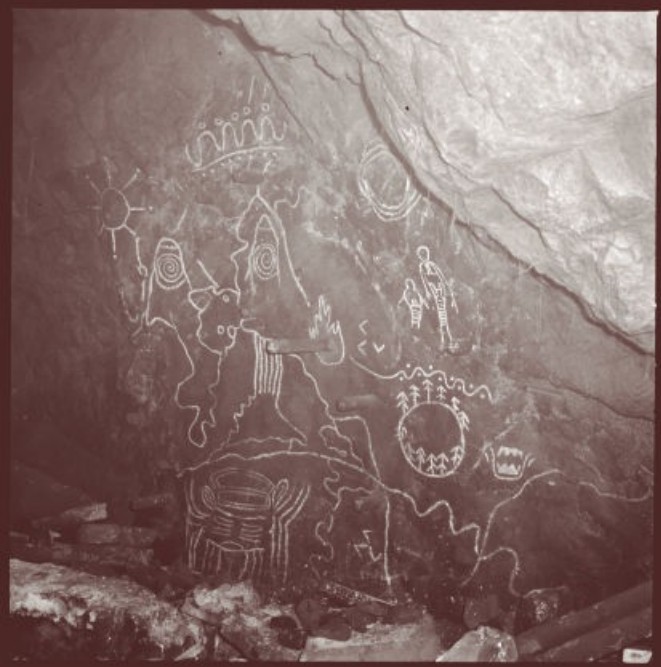
Exhibit · Owl Cave wall / map. Petroglyphs the logger journal sketches toward and Season 2 later reads in full: owl, peaks, sun and moon, circle of trees — the mark the ledger has been carrying since Lewis’s ring.
04.1HELDFrost dossier
The Archivist’s rule — mysteries are not secrets
Owl Cave section preamble
Before the cave journal, the Archivist stops the reader cold: learn to distinguish mysteries from secrets. Mysteries precede humankind, envelop us, and draw us forward into exploration and wonder. Secrets are human work — covert ways to gather, withhold, or impose power. Do not confuse pursuit of one with manipulation of the other. He even notes that where handwriting is obscure, he has typed entries for clarity — a small confession that the ledger is already mediated.
Held as a reading rule for the rest of The Ledger, including later Blue Rose work. When the file turns ugly or classified, ask which kind of darkness you are looking at.
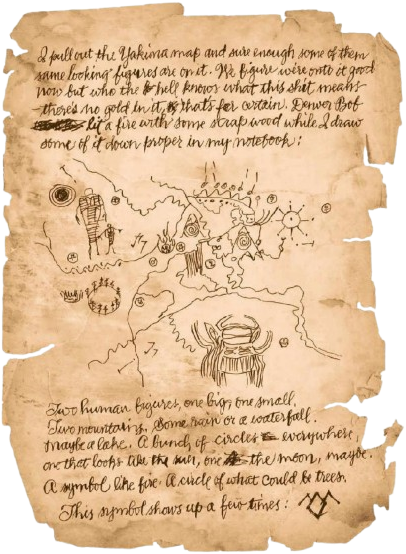
Undated dash-entries (Tammy: paper and ink fit roughly 1875–80) follow two lowlifes — later tied to Wayne Chance and Denver Bob Hobbes — hunting a mine in cave country. They find a deep cave with branching passages, entrance half-hidden by piled rocks, a “queer platform” nearby with bundles, herbs, small bones. A compass needle spins. They clear the rocks, light lanterns, push a hundred feet down a snaky passage into a vast chamber. Petroglyphs look like a child’s bird-scribble. Then something screeches out of the dark; they run; Denver Bob drops his lantern; a huge bird — Bob says owl — passes over them. Later: peculiar whistling and moaning from the cave; Bob thinks voices; the narrator sees the thing’s eyes when he closes his own. He wakes; Denver Bob is gone — gear and Spencer rifle left behind. The narrator abandons for Spokane.
The journal turns up in 1879 in Spokane’s Masonic temple stacks — found at an abandoned camp in a saddlebag on a starved mule’s corpse. No human remains. The Spencer with “DB” on the stock is later lost. The Yakima map mentioned in the entries is never found. Neither man is seen again.
Exhibit · notebook page from the logger journal. Click to enlarge — Yakima map figures drawn down while Denver Bob lights a fire; ends on the Owl Cave mark. The map itself stays missing from the recovered saddlebag.
The Archivist names the site Owl Cave — mountains east of Twin Peaks, Ghostwood, lava tubes, still partly unexplored; long known to native people; first settler discovery claim if Lewis never wrote it. LEAD as incident; HELD as place-name in the Archivist’s geography. Why a Masonic lodge kept the journal is its own small open question.
Season 2 · Cooper’s case notes (Tammy cross-check)
Tammy, reading the logger journal, finds a reference in Agent Cooper’s original case notes to a similarly described Owl Cave near Twin Peaks. On screen in Season 2, the cave and petroglyph map become investigative tools in the Lodge war — the same place-name crossing from Frost’s nineteenth-century dash-entries into 1989 federal paper. Owl Cave is the hinge: Arc 01’s deep history meets Arc 05’s Grove night. The ring recovered under Desmond’s Fat Trout trailer (Arc 04) belongs to the same register.
Screen confirms the place and its use in the Cooper case. It does not prove every claim in the 1870s journal (the screech, the vanishing, the map). Treat this card as an echo-link inside Arc 01. Full Grove / Lodge night: Arc 05 · Threshold. Ring / Case 89: Arc 04.
Logging, fire, Packard’s Gazette tale, Milford’s camping claims — the town begins to write itself into the ledger.
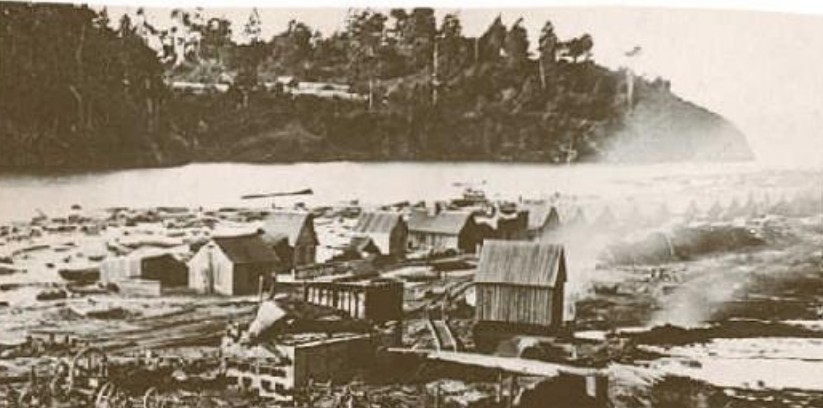
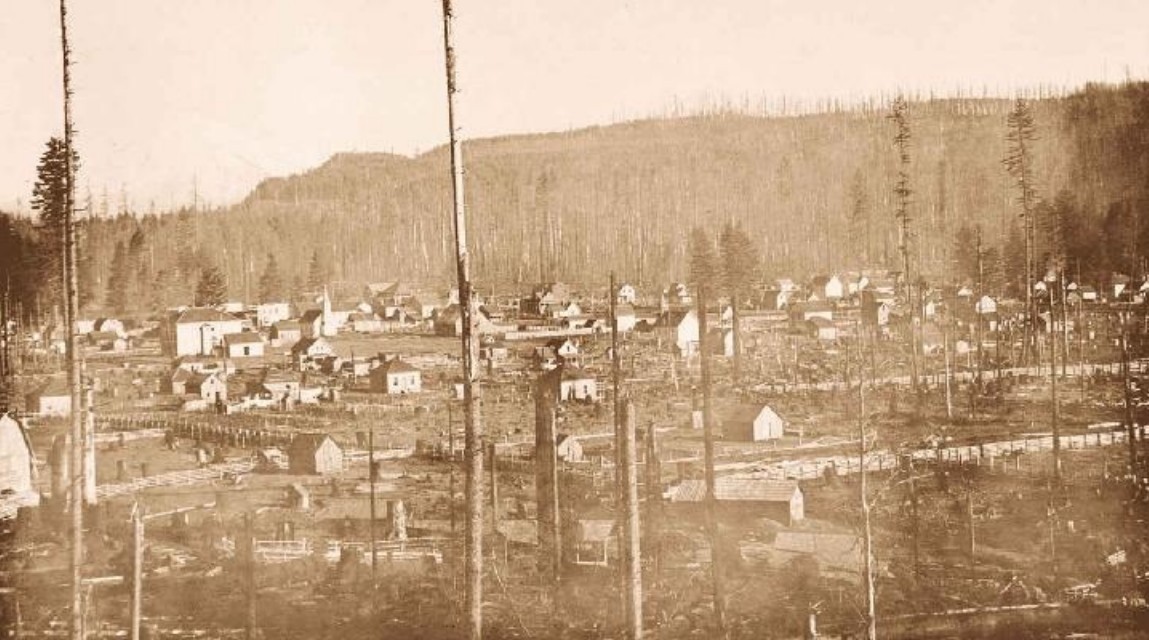
Exhibit · early town weather. Logging mania arrives: water, timber, mill smoke — the civic floor under Burning River, Packard’s Gazette, and the Milford brothers.
05.1HELDFrost dossier
Night of the Burning River — 24 February 1902
24 February 1902
Civilization arrives as logging mania. The dossier includes an early editorial — likely Spokesman-Review orbit, author unnamed — on a river logjam fire outside then-unincorporated Twin Peaks. The headline tension is already mythic: man-made calamity or ancient curse? Tammy notes Packards and Martells among the prominent founding families.
She verifies the event from other records: the night of February 24, 1902; fire spreads from the jam onto land; the death count later rises to eight when two victims die of complications days afterward. Story-date rhyme with Laura’s later February 24 is left for the reader to feel; the dossier does not sermonize it here.
Exhibit · “The Night of the Burning River; man-made calamity or ancient curse?” — dossier plate for the 24 February 1902 logjam fire outside then-unincorporated Twin Peaks.
Held as early civic disaster. The editorial’s curse-versus-industry question stays open — tone, not verdict.
14 May 1927 · Twin Peaks Gazette · Issue 18, Vol. 5
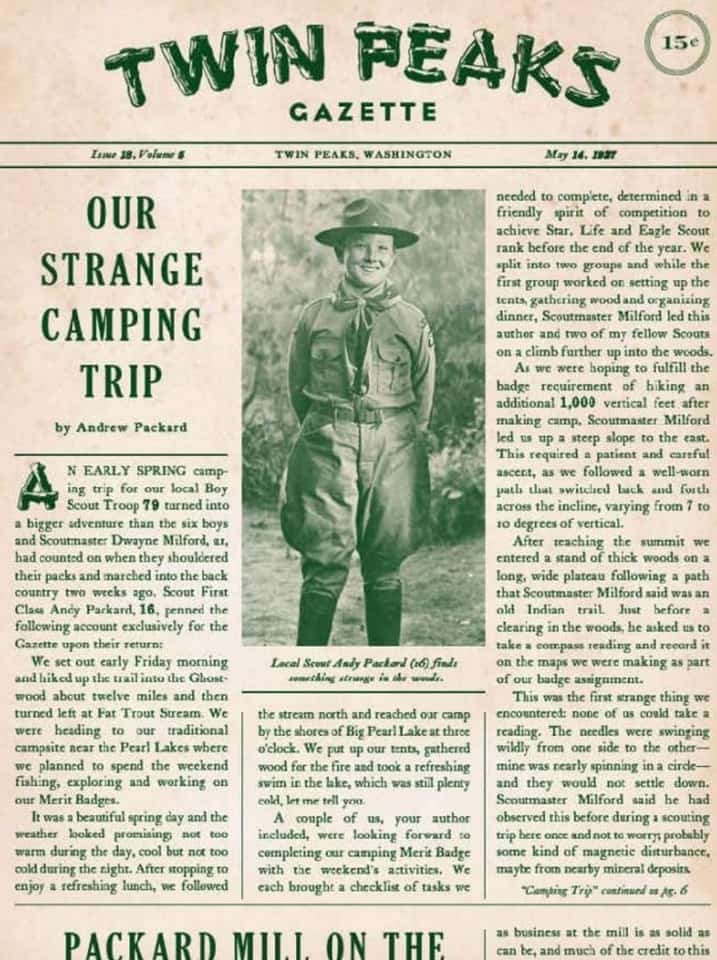
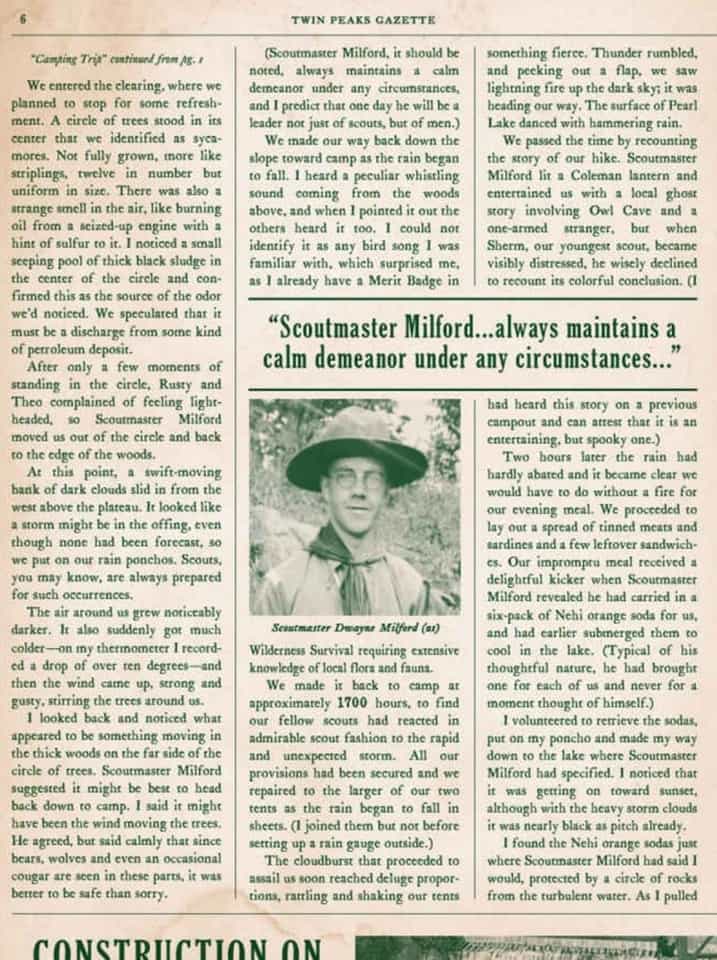
The town’s young biweekly prints Scout First Class Andrew Packard’s first-person feature, “Our Strange Camping Trip.” In the physical book this is facsimile newsprint across multiple pages — easy to under-read if you only skim Tammy’s later note. Troop 79 hikes about twelve miles into Ghostwood, turns at Fat Trout Stream, camps at Big Pearl Lake. Scoutmaster Dwayne Milford (21) takes Andy and two others higher for a badge climb along an old Indian trail onto a plateau where every compass needle spins and will not settle. Milford calls it magnetic disturbance / mineral deposits — he has “seen this before.”
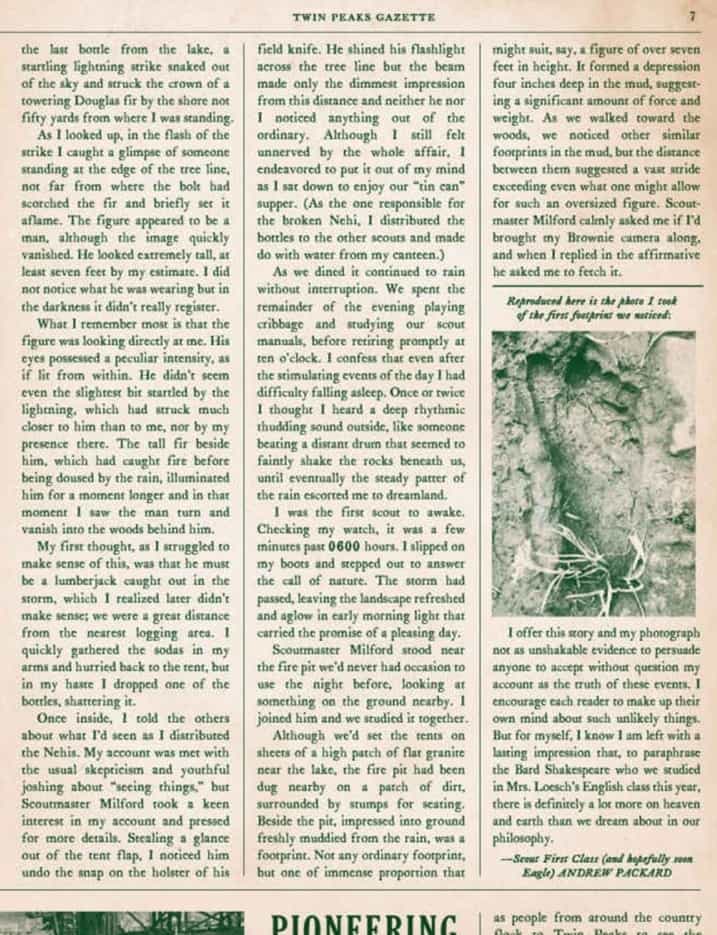
They find a circle of sycamores; at the center, a small pool of thick black sludge that smells like burning oil with a hint of sulfur. Scouts standing in the circle feel light-headed. That night the temperature at Pearl Lake drops hard in a sudden storm. Milford entertains them with a local ghost story involving Owl Cave and a one-armed stranger. Andy hears a peculiar whistling from the woods and sees something moving near the sycamores. During lightning by a towering Douglas fir he glimpses a figure at least seven feet tall — eyes with a “peculiar intensity, as if lit from within.” He drops his Nehi. At 0600 he and Milford find a vast footprint four inches deep in the mud; Andy photographs it with a Brownie. He closes with Shakespeare’s heaven-and-earth line and signs as Scout First Class (hoping for Eagle) Andrew Packard.
Exhibit · Gazette p.1 — “Our Strange Camping Trip.” Andy Packard (16), Scoutmaster Dwayne Milford, Ghostwood / Pearl Lakes, spinning compasses.Exhibit · Gazette p.6 — sycamore circle and sulfur sludge; Milford’s Owl Cave / one-armed-stranger story; whistling in the woods.Exhibit · Gazette p.7 — the lightning figure (~7 ft, eyes lit from within) and Andy’s Brownie photo of the deep footprint.
Contaminated as proof of a creature — the Archivist offers “no encouragement or confirmation”; it probably sold papers. Held as a rich press artifact: Packard + Dwayne Milford on the same trail, magnetic anomaly, sycamore/sludge locus, Owl Cave already told as local ghost lore, and a footprint plate. Andrew’s later malfeasant path may throw shade backward; Dwayne will matter again when Douglas’s older claim surfaces in the June diary (next card).
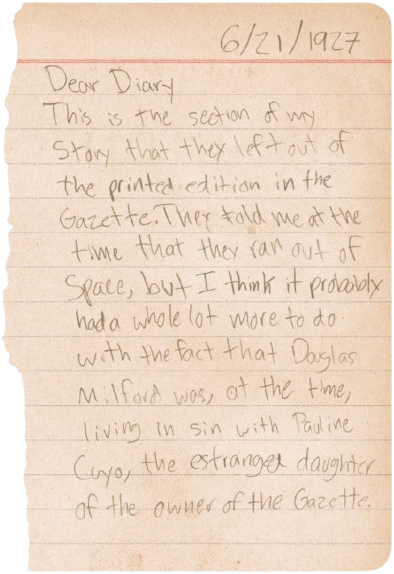
Douglas Milford — giant, “walking owl,” ruined film
Andrew’s diary · 21 June 1927 · then the town drunk
Different trip, same woods weather. Among Andrew Packard’s papers (surfaced after his first “death” in 1987) sits a June 21, 1927 diary that opens with why the Gazette cut his story short: they claimed lack of space, but Andy suspects Douglas Milford — then living in sin with Pauline Cuyo, estranged daughter of the Gazette’s owner. What follows is Scoutmaster Dwayne Milford’s account of younger brother Douglas. About six months before Andy’s Gazette outing (~late 1926), Douglas returned from his own camping trip claiming a forest “giant,” then a “walking owl” nearly as tall as a man. He swore he had photographs; the film was prematurely exposed — he blamed the Milford pharmacy darkroom and Dwayne’s chemicals. He also claimed near-total recall, which Dwayne confirms. Douglas vanishes into the woods for days, then interrupts a Regional Scoutmaster Council in Spokane demanding a full investigation.
Exhibit · Andy’s diary, 6/21/1927 — the cut Gazette section; Douglas + Pauline Cuyo as the suspected reason the paper ran out of “space.”
The Archivist’s next beat is social, not cryptid: many in town blame demon rum, not Bigfoot, for derailing Douglas. Through Prohibition he becomes the town drunk; after the 1929 crash he rides the rails through the Depression. Little is heard until he enlists the day after Pearl Harbor — and Arc 02 picks him up into quartermaster work, Guam trouble, and Roswell.
LEAD bridging Owl Cave mythology to a named Twin Peaks resident whose federal afterlife will rebuild the century’s secret file. Giant and walking owl stay unverified; the character and the ruined film are what the ledger can hold.
The Secret History of Twin Peaks (Mark Frost, 2016) — PDF pp. ~10–16 (TP intro + Archivist opening); ~16–25 (1805); ~29–45 (1809); ~47–59 (Chief Joseph); ~65–72 (Owl Cave); ~73–84 (town / Packard / Milford). Page numbers = PDF reader order.
The Final Dossier (Mark Frost, 2017) — not a chronological node in Arc 01; later annotation / character chapters when those arcs and dossiers need them.
Twin Peaks Season 2 — Owl Cave on screen; TP cross-reference to Cooper’s case notes.